|
1 members (Webmaster),
825
guests, and
26
robots. |
|
Key:
Admin,
Global Mod,
Mod
|
|
S |
M |
T |
W |
T |
F |
S |
|
|
1
|
2
|
3
|
4
|
5
|
6
|
|
7
|
8
|
9
|
10
|
11
|
12
|
13
|
|
14
|
15
|
16
|
17
|
18
|
19
|
20
|
|
21
|
22
|
23
|
24
|
25
|
26
|
27
|
|
28
|
29
|
30
|
|
|
|
|
|
There are no members with birthdays on this day. |
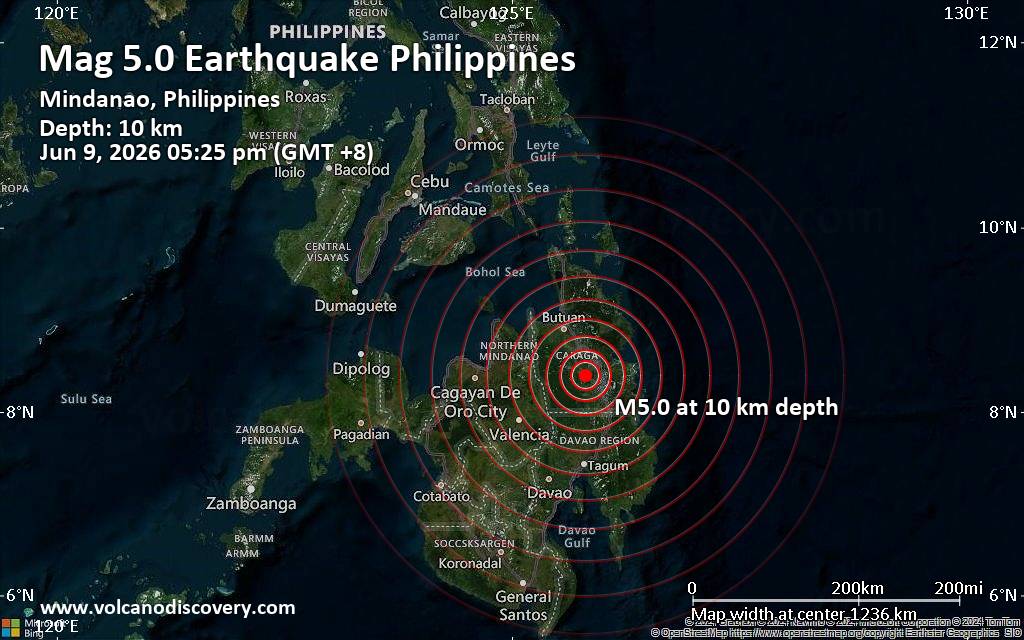
Significant earthquake of magnitude 5.0 just reported 22 km southwest of Prosperidad, Philippines
• Strong mag. 5.0 earthquake - Mindanao, Philippines, on Tuesday, Jun 9, 2026...
• World Earthquake Report for Tuesday, 9 June 2026
• Moderate magnitude 4.8 earthquake 110 km southwest of Tambolaka, Indonesia
• Moderate mag. 4.8 earthquake - South of Sumbawa, Indonesia, on Tuesday, Jun...
• Volcano earthquake report for Tuesday, 9 Jun 2026
|

#47853
Thu 11 Mar 2010 02:09:AM
|
Joined: Feb 2001
Posts: 678,975
Launch Director
|
OP

Launch Director
Joined: Feb 2001
Posts: 678,975 |
HUBBLE SPACE TELESCOPE - Continuing to Collect World Class Science
�
DAILY REPORT ������#5049
�
PERIOD COVERED: 5am March 9 - 5am March 10, 2010 (DOY 068/10:00z-069/10:00z)
�
OBSERVATIONS SCHEDULED
�
ACS/WFC/WFC3/UV 11633
�
A Precision White Dwarf Cooling Age for NGC 6397
�
We propose to obtain second epoch imaging of the globular cluster NGC
6397, which has the deepest ACS/WFC dataset (126 orbits in Cycle 13)
ever obtained in a globular cluster. These additional 14 orbits would
enable the construction of a proper motion - cleaned white dwarf cooling
sequence reaching fainter than the observed truncation point of the
white dwarf luminosity function; a byproduct will be absolute proper
motions (relative to the extragalactic reference frame) of the rich
spheroid field population. Our data shows the long sought ``blue hook'',
a feature in the WD cooling sequence predicted in theoretical white
dwarf models; the improved photometry and statistics afforded by the
second epoch observations are needed to confirm the blue hook and to
test other aspects of white dwarf cooling models that contribute to a
0.5 Gyr or greater uncertainty in the age. The proposed observations
will provide formal constraints on the age and formation timescale of
NGC 6397 that will be smaller than 1 Gyr and place the cluster's
formation epoch relative to the end of reionization. The final proper
motion-purified white dwarf sequence will be a powerful constraint for
white dwarf cooling models and atmospheres, the basis for white
dwarf-based globular cluster age determinations, and also constrain the
fraction of binary white dwarfs.
�
COS/NUV 11894
�
NUV Detector Dark Monitor
�
The purpose of this proposal is to measure the NUV detector dark rate by
taking long science exposures with no light on the detector. The
detector dark rate and spatial distribution of counts will be compared
to pre-launch and SMOV data in order to verify the nominal operation of
the detector. Variations of count rate as a function of orbital position
will be analyzed to find dependence of dark rate on proximity to the
SAA. Dependence of dark rate as function of time will also be tracked.
�
NIC3/WFC3/IR 11149
�
Characterizing the Stellar Populations in Lyman-Alpha Emitters and Lyman
Break Galaxies at 5.7<z<7 in the Subaru Deep Field
�
The epoch of reionization marks a major phase transition of the
Universe, during which the intergalactic space became transparent to UV
photons. Determining when this occurred and the physical processes
involved represents the latest frontier in observational cosmology. Over
the last few years, searches have intensified to identify the population
of high-redshift (z>6) galaxies that might be responsible for this
process, but the progress is hampered partly by the difficulty of
obtaining physical information (stellar mass, age, star formation
rate/history) for individual sources. This is because the number of z>6
galaxies that have both secure spectroscopic redshifts and high-quality
infrared photometry (especially with Spitzer/IRAC) is still fairly
small. Considering that only several photometric points are available
per source, and that many model SEDs are highly degenerate, it is
crucial to obtain as many observational constraints as possible for each
source to ensure the validity of SED modeling. To better understand the
physical properties of high-redshift galaxies, we propose here to
conduct HST/NICMOS (72 orbits) and Spitzer/IRAC (102 hours) imaging of
spectroscopically confirmed, bright (z<26 mag (AB)) Ly-alpha emitters
(LAEs) and Lyman-break galaxies (LBGs) at 5.7<z<7 selected from the
Subaru Deep Field. Spectroscopic redshifts remove one critical free
parameter from SED modeling while bright source magnitudes ensure
high-quality photometric data. By making accurate determinations of
stellar masses, ages, and star-formation histories, we will specifically
address the following major questions: (1) Do LAEs and LBGs represent
physically different galaxy populations at z>6 as suggested recently?
(2) Is Ly-alpha emission systematically suppressed at z>6 with respect
to continuum emission? (i.e., are we reaching the epoch of incomplete
reionization?), and (3) Do we see any sign of abnormally young stellar
population in any of the z>6 galaxies?
�
STIS/CC 11845
�
CCD Dark Monitor Part 2
�
Monitor the darks for the STIS CCD.
�
STIS/CC 11847
�
CCD Bias Monitor-Part 2
�
Monitor the bias in the 1x1, 1x2, 2x1, and 2x2 bin settings at gain=1,
and 1x1 at gain = 4, to build up high-S/N superbiases and track the
evolution of hot columns.
�
STIS/CC/MA 11516
�
COS-GTO: Cold ISM
�
With the COS, we will be able to observe interstellar spectra in a new
regime, translucent clouds, for atomic, ionic, and molecular lines and
bands, and extinction curves. The COS will allow us to observe stars
with total visual extinctions up to 10 magnitudes, and the grain size
indicator Rv up to 4.5. In translucent clouds we expect to see the
transition from neutral and ionized carbon to mostly C I, and then from
there, we should expect to see carbon increasingly locked up in
molecular form, as CO. Other species are expected to make similar
transitions, so we should find detectable abundances of molecules such
as H2O, OH, CS, CH2, SiO, and others; also, lower ionization fractions
of the metallic elements - and higher depletions of those elements as
well. Given that we expect to find higher depletions, we should see an
altered grain size distribution, which may show up in the extinction
curves, probably as lower far-UV extinction than in diffuse clouds.
Finally, we will search for neutral PAHs in absorption, as diffuse bands
in the UV, paralleling the optical DIBs (which are thought by some
scientists to be formed by singly-ionized PAHs). In translucent clouds,
models show that the PAHs will be neutral, not in cationic form.
�
STIS/CCD/MA1/MA2 11860
�
MAMA Spectroscopic Sensitivity and Focus Monitor
�
The purpose of this proposal is to monitor the sensitivity of each MAMA
grating mode to detect any change due to contamination or other causes,
and to also monitor the STIS focus in a spectroscopic and an imaging
mode.
�
WFC3/IR/S/C 11929
�
IR Dark Current Monitor
�
Analyses of ground test data showed that dark current signals are more
reliably removed from science data using darks taken with the same
exposure sequences as the science data, than with a single dark current
image scaled by desired exposure time. Therefore, dark current images
must be collected using all sample sequences that will be used in
science observations. These observations will be used to monitor changes
in the dark current of the WFC3-IR channel on a day-to-day basis, and to
build calibration dark current ramps for each of the sample sequences to
be used by Gos in Cycle 17. For each sample sequence/array size
combination, a median ramp will be created and delivered to the
calibration database system (CDBS).
�
WFC3/UV/IR 11664
�
The WFC3 Galactic Bulge Treasury Program: Populations, Formation
History, and Planets
�
Exploiting the full power of the Wide Field Camera 3 (WFC3), we propose
deep panchromatic imaging of four fields in the Galactic bulge. These
data will enable a sensitive dissection of its stellar populations,
using a new set of reddening-free photometric indices we have
constructed from broad-band filters across UV, optical, and near-IR
wavelengths. These indices will provide accurate temperatures and
metallicities for hundreds of thousands of individual bulge stars.
Proper motions of these stars derived from multi-epoch observations will
allow separation of pure bulge samples from foreground disk
contamination. Our catalogs of proper motions and panchromatic
photometry will support a wide range of bulge studies.
�
Using these photometric and astrometric tools, we will reconstruct the
detailed star-formation history as a function of position within the
bulge, and thus differentiate between rapid- and extended-formation
scenarios. We will also measure the dependence of the stellar mass
function on metallicity, revealing how the characteristic mass of star
formation varies with chemistry. Our sample of bulge stars with accurate
metallicities will include 12 candidate hosts of extrasolar planets.
Planet frequency is correlated with metallicity in the solar
neighborhood; our measurements will extend this knowledge to a remote
environment with a very distinct chemistry.
�
Our proposal also includes observations of six well-studied globular and
open star clusters; these observations will serve to calibrate our
photometric indices, provide empirical population templates, and
transform the theoretical isochrone libraries into the WFC3 filter
system. Besides enabling our own program, these products will provide
powerful new tools for a host of other stellar-population investigations
with HST/WFC3. We will deliver all of the products from this Treasury
Program to the community in a timely fashion.
�
WFC3/UVIS 11628
�
Globular Cluster Candidates for Hosting a Central Black Hole
�
We are continuing our study of the dynamical properties of globular
clusters and we propose to obtain surface brightness profiles for high
concentration clusters. Our results to date show that the distribution
of central surface brightness slopes do not conform to standard models.
This has important implications for how they form and evolve, and
suggest the possible presence of central intermediate-mass black holes.
From our previous archival proposals (AR-9542 and AR- 10315), we find
that many high concentration globular clusters do not have flat cores or
steep central cusps, instead they show weak cusps. Numerical simulations
suggest that clusters with weak cusps may harbor intermediate-mass black
holes and we have one confirmation of this connection with omega
Centauri. This cluster shows a shallow cusp in its surface brightness
profile, while kinematical measurements suggest the presence of a black
hole in its center. Our goal is to extend these studies to a sample
containing 85% of the Galactic globular clusters with concentrations
higher than 1.7 and look for objects departing from isothermal behavior.
The ACS globular cluster survey (GO-10775) provides enough objects to
have an excellent coverage of a wide range of galactic clusters, but it
contains only a couple of the ones with high concentration. The proposed
sample consists of clusters whose light profile can only be adequately
measured from space-based imaging. This would take us close to
completeness for the high concentration cases and therefore provide a
more complete list of candidates for containing a central black hole.
The dataset will also be combined with our existing kinematic
measurements and enhanced with future kinematic studies to perform
detailed dynamical modeling.
�
WFC3/UVIS 11905
�
WFC3 UVIS CCD Daily Monitor
�
The behavior of the WFC3 UVIS CCD will be monitored daily with a set of
full-frame, four-amp bias and dark frames. A smaller set of 2Kx4K
subarray biases are acquired at less frequent intervals throughout the
cycle to support subarray science observations. The internals from this
proposal, along with those from the anneal procedure (Proposal 11909),
will be used to generate the necessary superbias and superdark reference
files for the calibration pipeline (CDBS).
�
WFC3/UVIS 11912
�
UVIS Internal Flats
�
This proposal will be used to assess the stability of the flat field
structure for the UVIS detector throughout the 15 months of Cycle 17.
The data will be used to generate on-orbit updates for the delta-flat
field reference files used in the WFC3 calibration pipeline, if
significant changes in the flat structure are seen.
�
FLIGHT OPERATIONS SUMMARY:
�
Significant Spacecraft Anomalies: (The following are preliminary reports
of potential non-nominal performance that will be investigated.)
�
HSTARS:
�
For DOY 055
12213 - Review of the 053 SMS PTAS lg2 file found that GSAcq(2,1,1) at
������������ 055/21:59:00z took two attempts to achieve Coarse Track Data Valid.
����������� �The acquisition was eventually successful and finished well within the
������������ time allotted so there was no effect on the science observation.
�
COMPLETED OPS REQUEST: (None)
�
COMPLETED OPS NOTES: (None)
�
��������������������� �SCHEDULED �SUCCESSFUL
FGS GSAcq ������������ �7 ��������������7
FGS REAcq ������������� �7 ��������������7 �����
OBAD with Maneuver 6 ��������������6 �����
�
SIGNIFICANT EVENTS: (None)
David Cottle
UBB Owner & Administrator
|
|



CMS The Best Conveyancing solicitors conveyancing quotes throughout the UK
For any webhosting enquiries please email webmaster@aus-city.com
|
|
Forums60
Topics779,622
Posts814,380
Members2,960
| |
Most Online22,463
May 9th, 2026
|
|
|