|
1 members (Webmaster),
825
guests, and
26
robots. |
|
Key:
Admin,
Global Mod,
Mod
|
|
S |
M |
T |
W |
T |
F |
S |
|
|
1
|
2
|
3
|
4
|
5
|
6
|
|
7
|
8
|
9
|
10
|
11
|
12
|
13
|
|
14
|
15
|
16
|
17
|
18
|
19
|
20
|
|
21
|
22
|
23
|
24
|
25
|
26
|
27
|
|
28
|
29
|
30
|
|
|
|
|
|
There are no members with birthdays on this day. |
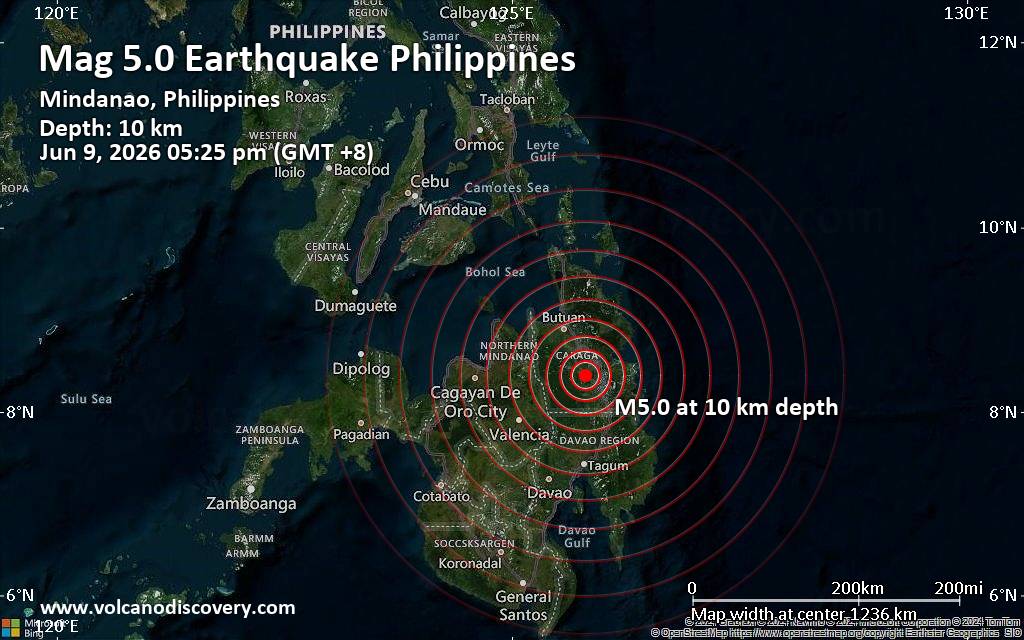
Significant earthquake of magnitude 5.0 just reported 22 km southwest of Prosperidad, Philippines
• Strong mag. 5.0 earthquake - Mindanao, Philippines, on Tuesday, Jun 9, 2026...
• World Earthquake Report for Tuesday, 9 June 2026
• Moderate magnitude 4.8 earthquake 110 km southwest of Tambolaka, Indonesia
• Moderate mag. 4.8 earthquake - South of Sumbawa, Indonesia, on Tuesday, Jun...
• Volcano earthquake report for Tuesday, 9 Jun 2026
|

#47859
Thu 11 Mar 2010 01:00:PM
|
Joined: Feb 2001
Posts: 678,975
Launch Director
|
OP

Launch Director
Joined: Feb 2001
Posts: 678,975 |
HUBBLE SPACE TELESCOPE - Continuing to Collect World Class Science
DAILY REPORT #5050
PERIOD COVERED: 5am March 10 - 5am March 11, 2010 (DOY 069/10:00z-070/10:00z)
OBSERVATIONS SCHEDULED
ACS/WFC 11995
CCD Daily Monitor (Part 2)
This program comprises basic tests for measuring the read noise and dark
current of the ACS WFC and for tracking the growth of hot pixels. The
recorded frames are used to create bias and dark reference images for
science data reduction and calibration. This program will be executed
four days per week (Mon, Wed, Fri, Sun) for the duration of Cycle 17. To
facilitate scheduling, this program is split into three proposals. This
proposal covers 320 orbits (20 weeks) from 1 February 2010 to 20 June
2010.
NIC2 11148
High Contrast Imaging of Dusty White Dwarfs
For the past 18 years, only one white dwarf with a circumstellar dust
disk was known to exist. In the last two years, six new disks have been
discovered. Since all material inwards of a few AU should be scoured
clean during post main sequence evolution, the primary explanation is
the presence of a planetary system that is perturbing relic
planetesimals into the tidal disruption radius of the white dwarf. Dusty
disks around white dwarfs should be markers for planets and we propose
to use high contrast imaging to search for faint companions down to 6
M_$J$ that may be feeding the disks. White dwarfs are uniquely suited
for planet searches, where the planet/white dwarf contrast is less than
for main sequence stars.
STIS/CC 11845
CCD Dark Monitor Part 2
Monitor the darks for the STIS CCD.
STIS/CC 11847
CCD Bias Monitor-Part 2
Monitor the bias in the 1x1, 1x2, 2x1, and 2x2 bin settings at gain=1,
and 1x1 at gain = 4, to build up high-S/N superbiases and track the
evolution of hot columns.
STIS/CCD 11999
JWST Calibration from a Consistent Absolute Calibration of Spitzer &
Hubble
Recently, Gordon, Bohlin, et al. submitted a successful Spitzer proposal
for cross calibration of HST and Spitzer. The cross-calibration targets
are stars in three categories: WDs, A-stars, and G-stars. Traditionally,
IR flux standards are extrapolations of stellar models that are tied to
absolute fluxes at shorter wavelengths. HST absolute flux standards are
among the best available with a solid basis that uses pure hydrogen
models of hot WD stars for the SED slopes and is tied to Vega at 5556A
via precise Landolt V-band photometry. Consistently matching models to
our three categories of HST observations along with Spitzer photometry
and the few existing absolute IR flux determinations will provide a
solid basis for JWST flux calibration over its 0.8-30micron range. The
goal of this proposal is to complete the HST observations of the set of
HST/Spitzer cross-calibration stars. Using a variety of standard stars
with three different spectral types will ensure that the final
calibration is not significantly affected by systematic uncertainties.
WFC3/ACS/IR 11142
Revealing the Physical Nature of Infrared Luminous Galaxies at 0.3<z<2.7
Using HST and Spitzer
We aim to determine physical properties of IR luminous galaxies at
0.3<z<2.7 by requesting coordinated HST/NIC2 and MIPS 70um observations
of a unique, 24um flux-limited sample with complete Spitzer mid-IR
spectroscopy. The 150 sources investigated in this program have S(24um)
> 0.8mJy and their mid-IR spectra have already provided the majority
targets with spectroscopic redshifts (0.3<z<2.7). The proposed
150~orbits of NIC2 and 66~hours of MIPS 70um will provide the physical
measurements of the light distribution at the rest-frame ~8000A and
better estimates of the bolometric luminosity. Combining these
parameters together with the rich suite of spectral diagnostics from the
mid-IR spectra, we will (1) measure how common mergers are among LIRGs
and ULIRGs at 0.3<z<2.7, and establish if major mergers are the drivers
of z>1 ULIRGs, as in the local Universe, (2) study the co-evolution of
star formation and blackhole accretion by investigating the relations
between the fraction of starburst/AGN measured from mid-IR spectra vs.
HST morphologies, L(bol) and z, and (3) obtain the current best
estimates of the far-IR emission, thus L(bol) for this sample, and
establish if the relative contribution of mid-to-far IR dust emission is
correlated with morphology (resolved vs. unresolved).
WFC3/IR 11587
Probing Population III Star Formation in a z=7 Galaxy
Population III (Pop III) stars, the first generation, metal-free stars
in the Universe, have been a main focus of the studies of early galaxy
formation and reionization. HeII 1640 emission originates from energetic
ionizing photons beyond 54.4eV, and is an ideal tracer of massive Pop
III star formation with strong far-UV radiation. HeII has not yet been
detected directly in individual galaxies at z<6.3, indicating a small
contribution of Pop III star formation at those redshifts. We propose to
use WFC3 narrow-band imaging to measure the flux of HeII emission in
galaxy IOK-1 (z=6.96), the highest redshift spectroscopically confirmed
galaxy to date. At this redshift, the HeII line is perfectly located in
the WFC3 F130N filter passband. Our deep narrow-band imaging will detect
a HeII flux down to 4x10^-18 erg/s/cm^2 at the 5-sigma level,
corresponding to a star formation rate from massive Pop III stars of ~1
M_sun per year, a factor of ~5 improvement to the best ground-based
results at lower redshift. Strong HeII emission, if detected, will
provide the first direct evidence of significant Pop III formation in
early galaxies at the end of the reionization epoch. We will also carry
out short F125W broad-band observations to measure the rest-frame UV
flux of this galaxy in order to constrain its total star formation rate
and to provide continuum subtraction for narrow-band imaging.
WFC3/IR 11738
SPIDERWEBS AND FLIES: OBSERVING MASSIVE GALAXY FORMATION IN ACTION
Distant luminous radio galaxies are among the brightest known galaxies
in the early Universe, pinpoint likely progenitors of dominant cluster
galaxies and are unique laboratories for studying massive galaxy
formation. Spectacular images with the ACS and NICMOS of one such
object, the "Spiderweb Galaxy" at z = 2.2, show in exquisite detail,
hierarchical merging occurring 11 Gyr ago. By imaging 3 additional
Spiderweb-like galaxies we wish to study this potentially crucial phase
of massive galaxy evolution, when hierarchical merging, galaxy
downsizing and AGN feedback are all likely to be occurring. Properties
of the complete sample of Spiderweb galaxies will be used to (i)
constrain models for the formation and evolution of the most massive
galaxies that dominate rich clusters and (ii) investigate the nature of
chain and tadpole galaxies, a fundamental but poorly understood
constituent of the early Universe.
We shall image rest-frame UV and optical continuum emission from 3 radio
galaxies with 2.4 < z < 3.8 that appear clumpy and large in shallow
WFPC/PC observations. The new observations will typically reach ~2
magnitudes fainter over 20-40 times larger area than previously.
Photometric and morphological parameters will be measured for satellite
galaxies ("flies") in the clumpy massive hosts and for galaxies in ~ 1.5
Mpc x 1.5 Mpc regions of surrounding protoclusters. Locations, sizes,
elongations, clumpiness, masses, and star formation rates of the merging
satellite and protocluster galaxies will be compared with new state of
the art simulations. Combination of ACS and WFC3 images will help
disentangle the properties of the young and old populations.
Specific goals include: (i) investigating star formation histories of
the satellite galaxies and the extended emission,
(ii) studying "downsizing" and merging scenarios and (iii) measuring the
statistics of linear galaxies and relating them to models for the
formation of massive galaxies and to the properties of the important but
enigmatic class of chain/tadpole galaxies in the HUDF.
WFC3/IR 11931
IR Signal Non-Linearity Calibration
These observations will be used to quantify the non-linear signal
behavior of the IR channel, as well as to create the IR channel
non-linearity calibration reference file. The non-linearity behavior of
each pixel in the detector will be investigated through the use of flat
fields, while the photometric behavior of point sources will be studied
using observations of 47 Tuc.
WFC3/IR/S/C 11929
IR Dark Current Monitor
Analyses of ground test data showed that dark current signals are more
reliably removed from science data using darks taken with the same
exposure sequences as the science data, than with a single dark current
image scaled by desired exposure time. Therefore, dark current images
must be collected using all sample sequences that will be used in
science observations. These observations will be used to monitor changes
in the dark current of the WFC3-IR channel on a day-to-day basis, and to
build calibration dark current ramps for each of the sample sequences to
be used by Gos in Cycle 17. For each sample sequence/array size
combination, a median ramp will be created and delivered to the
calibration database system (CDBS).
WFC3/UVIS 11905
WFC3 UVIS CCD Daily Monitor
The behavior of the WFC3 UVIS CCD will be monitored daily with a set of
full-frame, four-amp bias and dark frames. A smaller set of 2Kx4K
subarray biases are acquired at less frequent intervals throughout the
cycle to support subarray science observations. The internals from this
proposal, along with those from the anneal procedure (Proposal 11909),
will be used to generate the necessary superbias and superdark reference
files for the calibration pipeline (CDBS).
WFC3/UVIS 11908
Cycle 17: UVIS Bowtie Monitor
Ground testing revealed an intermittent hysteresis type effect in the
UVIS detector (both CCDs) at the level of ~1%, lasting hours to days.
Initially found via an unexpected bowtie-shaped feature in flatfield
ratios, subsequent lab tests on similar e2v devices have since shown
that it is also present as simply an overall offset across the entire
CCD, i.e., a QE offset without any discernable pattern. These lab tests
have further revealed that overexposing the detector to count levels
several times full well fills the traps and effectively neutralizes the
bowtie. Each visit in this proposal acquires a set of three 3x3 binned
internal flatfields: the first unsaturated image will be used to detect
any bowtie, the second, highly exposed image will neutralize the bowtie
if it is present, and the final image will allow for verification that
the bowtie is gone.
WFC3/UV/IR 11664
The WFC3 Galactic Bulge Treasury Program: Populations, Formation
History, and Planets
Exploiting the full power of the Wide Field Camera 3 (WFC3), we propose
deep panchromatic imaging of four fields in the Galactic bulge. These
data will enable a sensitive dissection of its stellar populations,
using a new set of reddening-free photometric indices we have
constructed from broad-band filters across UV, optical, and near-IR
wavelengths. These indices will provide accurate temperatures and
metallicities for hundreds of thousands of individual bulge stars.
Proper motions of these stars derived from multi-epoch observations will
allow separation of pure bulge samples from foreground disk
contamination. Our catalogs of proper motions and panchromatic
photometry will support a wide range of bulge studies.
Using these photometric and astrometric tools, we will reconstruct the
detailed star-formation history as a function of position within the
bulge, and thus differentiate between rapid- and extended-formation
scenarios. We will also measure the dependence of the stellar mass
function on metallicity, revealing how the characteristic mass of star
formation varies with chemistry. Our sample of bulge stars with accurate
metallicities will include 12 candidate hosts of extrasolar planets.
Planet frequency is correlated with metallicity in the solar
neighborhood; our measurements will extend this knowledge to a remote
environment with a very distinct chemistry.
Our proposal also includes observations of six well-studied globular and
open star clusters; these observations will serve to calibrate our
photometric indices, provide empirical population templates, and
transform the theoretical isochrone libraries into the WFC3 filter
system. Besides enabling our own program, these products will provide
powerful new tools for a host of other stellar-population investigations
with HST/WFC3. We will deliver all of the products from this Treasury
Program to the community in a timely fashion.
WFC3/UVIS/IR 11644
A Dynamical-Compositional Survey of the Kuiper Belt: A New Window Into
the Formation of the Outer Solar System
The eight planets overwhelmingly dominate the solar system by mass, but
their small numbers, coupled with their stochastic pasts, make it
impossible to construct a unique formation history from the dynamical or
compositional characteristics of them alone. In contrast, the huge
numbers of small bodies scattered throughout and even beyond the
planets, while insignificant by mass, provide an almost unlimited number
of probes of the statistical conditions, history, and interactions in
the solar system. To date, attempts to understand the formation and
evolution of the Kuiper Belt have largely been dynamical simulations
where a hypothesized starting condition is evolved under the
gravitational influence of the early giant planets and an attempt is
made to reproduce the current observed populations. With little
compositional information known for the real Kuiper Belt, the test
particles in the simulation are free to have any formation location and
history as long as they end at the correct point. Allowing compositional
information to guide and constrain the formation, thermal, and
collisional histories of these objects would add an entire new dimension
to our understanding of the evolution of the outer solar system. While
ground based compositional studies have hit their flux limits already
with only a few objects sampled, we propose to exploit the new
capabilities of WFC3 to perform the first ever large-scale
dynamical-compositional study of Kuiper Belt Objects (KBOs) and their
progeny to study the chemical, dynamical, and collisional history of the
region of the giant planets. The sensitivity of the WFC3 observations
will allow us to go up to two magnitudes deeper than our ground based
studies, allowing us the capability of optimally selecting a target list
for a large survey rather than simply taking the few objects that can be
measured, as we have had to do to date. We have carefully constructed a
sample of 120 objects which provides both overall breadth, for a general
understanding of these objects, plus a large enough number of objects in
the individual dynamical subclass to allow detailed comparison between
and within these groups. These objects will likely define the core
Kuiper Belt compositional sample for years to come. While we have many
specific results anticipated to come from this survey, as with any
project where the field is rich, our current knowledge level is low, and
a new instrument suddenly appears which can exploit vastly larger
segments of the population, the potential for discovery -- both
anticipated and not -- is extraordinary.
FLIGHT OPERATIONS SUMMARY:
Significant Spacecraft Anomalies: (The following are preliminary reports
of potential non-nominal performance that will be investigated.)
HSTARS:
12214 - GSAcq(2,3,3) scheduled at 070/00:55:05 -01:01:54 had failed to
RGA Hold (gyro control) due to search radius limit exceeded on FGS-2.
Observations affected: WFC3 98 - 108, Proposal ID#11664, STIS 54
Proposal ID#11845.
COMPLETED OPS REQUEST:
18822-0 - Clear GENSLEW Slot-8 for COS proposal 11639 @ 069/2214z
COMPLETED OPS NOTES: (None)
SCHEDULED SUCCESSFUL
FGS GSAcq 6 5
FGS REAcq 9 9
OBAD with Maneuver 6 5
SIGNIFICANT EVENTS: (None)
David Cottle
UBB Owner & Administrator
|
|



CMS The Best Conveyancing solicitors conveyancing quotes throughout the UK
For any webhosting enquiries please email webmaster@aus-city.com
|
|
Forums60
Topics779,622
Posts814,380
Members2,960
| |
Most Online22,463
May 9th, 2026
|
|
|