|
0 members (),
1,238
guests, and
22
robots. |
|
Key:
Admin,
Global Mod,
Mod
|
|
S |
M |
T |
W |
T |
F |
S |
|
|
1
|
2
|
3
|
4
|
5
|
6
|
|
7
|
8
|
9
|
10
|
11
|
12
|
13
|
|
14
|
15
|
16
|
17
|
18
|
19
|
20
|
|
21
|
22
|
23
|
24
|
25
|
26
|
27
|
|
28
|
29
|
30
|
|
|
|
|
|
There are no members with birthdays on this day. |
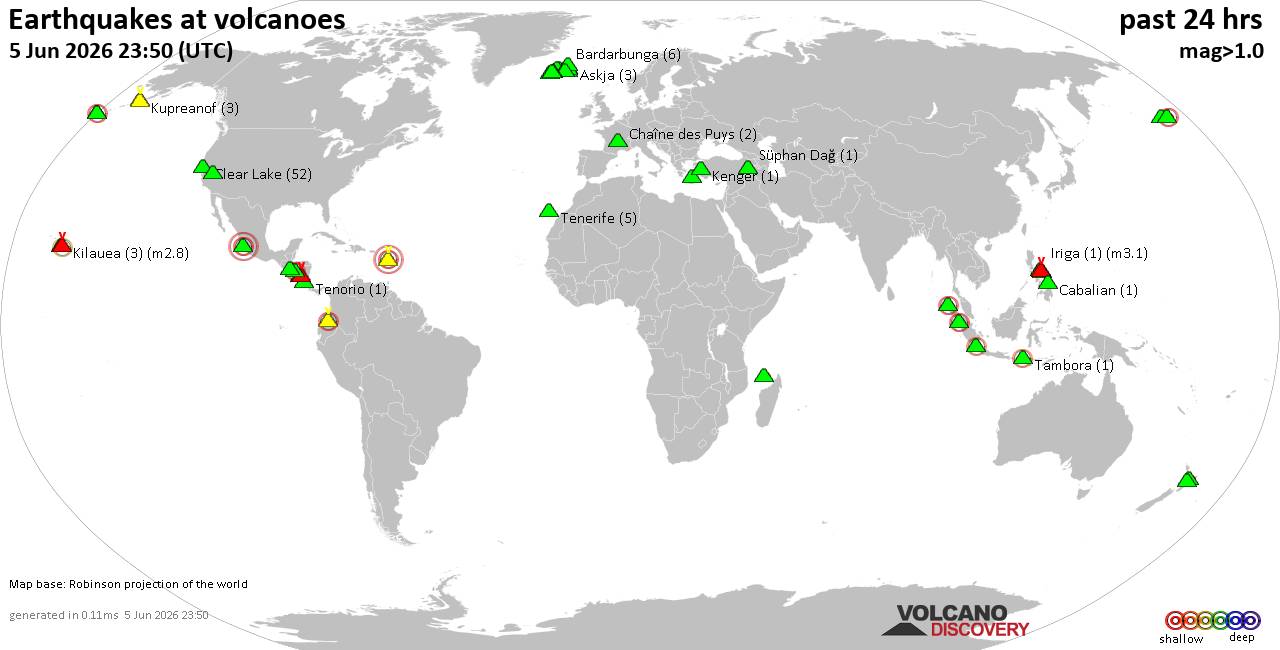
Volcano earthquake report for Friday, 5 Jun 2026
• Small magnitude 3.1 earthquake 11 miles southwest of Pukatja, South Austral...
• Moderate mag. 4.2 earthquake - 40 km west of Matias Romero Avendano, Estado...
• World Earthquake Report for Friday, 5 June 2026
• Magnitude 3.8 earthquake strikes near Carlsbad, Eddy County, New Mexico, US...
• Moderate mag. 4.7 earthquake - North Pacific Ocean, 244 km southeast of Hac...
|

#78607
Mon 06 Feb 2012 05:00:AM
|
Joined: Feb 2001
Posts: 678,975
Launch Director
|
OP

Launch Director
Joined: Feb 2001
Posts: 678,975 |
Vital clues about the devastating ends to the lives of massive stars can be found by studying the aftermath of their explosions. In its more than twelve years of science operations, NASA's Chandra X-ray Observatory has studied many of these supernova remnants sprinkled across the galaxy. The latest example of this important investigation is Chandra's new image of the supernova remnant known as G350.1-0.3. This stellar debris field is located some 14,700 light years from the Earth toward the center of the Milky Way. Evidence from Chandra and from ESA's XMM-Newton telescope suggest that a compact object within G350.1+0.3 may be the dense core of the star that exploded. The position of this likely neutron star, seen by the arrow pointing to "neutron star" in the inset image, is well away from the center of the X-ray emission. If the supernova explosion occurred near the center of the X-ray emission then the neutron star must have received a powerful kick in the supernova explosion. Data suggest this supernova remnant, as it appears in the image, is 600 and 1,200 years old. If the estimated location of the explosion is correct, this means the neutron star has been moving at a speed of at least 3 million miles per hour since the explosion. Another intriguing aspect of G350.1-0.3 is its unusual shape. Many supernova remnants are nearly circular, but G350.1-0.3 is strikingly asymmetrical as seen in the Chandra data in this image (gold). Infrared data from NASA's Spitzer Space Telescope (light blue) also trace the morphology found by Chandra. Astronomers think that this bizarre shape is due to stellar debris field expanding into a nearby cloud of cold molecular gas. The age of 600-1,200 years puts the explosion that created G350.1-0.3 in the same time frame as other famous supernovas that formed the Crab and SN 1006 supernova remnants. However, it is unlikely that anyone on Earth would have seen the explosion because of the obscuring gas and dust that lies along our line of sight to the remnant. These results appeared in the April 10, 2011 issue of The Astrophysical Journal. Image Credits: X-ray: NASA/CXC/SAO/I. Lovchinsky et al; IR: NASA/JPL-Caltech Source: Remnant of a Supernova
David Cottle
UBB Owner & Administrator
|
|



CMS The Best Conveyancing solicitors conveyancing quotes throughout the UK
For any webhosting enquiries please email webmaster@aus-city.com
|
|
Forums60
Topics779,421
Posts814,179
Members2,960
| |
Most Online22,463
May 9th, 2026
|
|
|