|
0 members (),
710
guests, and
41
robots. |
|
Key:
Admin,
Global Mod,
Mod
|
|
S |
M |
T |
W |
T |
F |
S |
|
|
1
|
2
|
3
|
4
|
5
|
6
|
|
7
|
8
|
9
|
10
|
11
|
12
|
13
|
|
14
|
15
|
16
|
17
|
18
|
19
|
20
|
|
21
|
22
|
23
|
24
|
25
|
26
|
27
|
|
28
|
29
|
30
|
|
|
|
|
|
There are no members with birthdays on this day. |
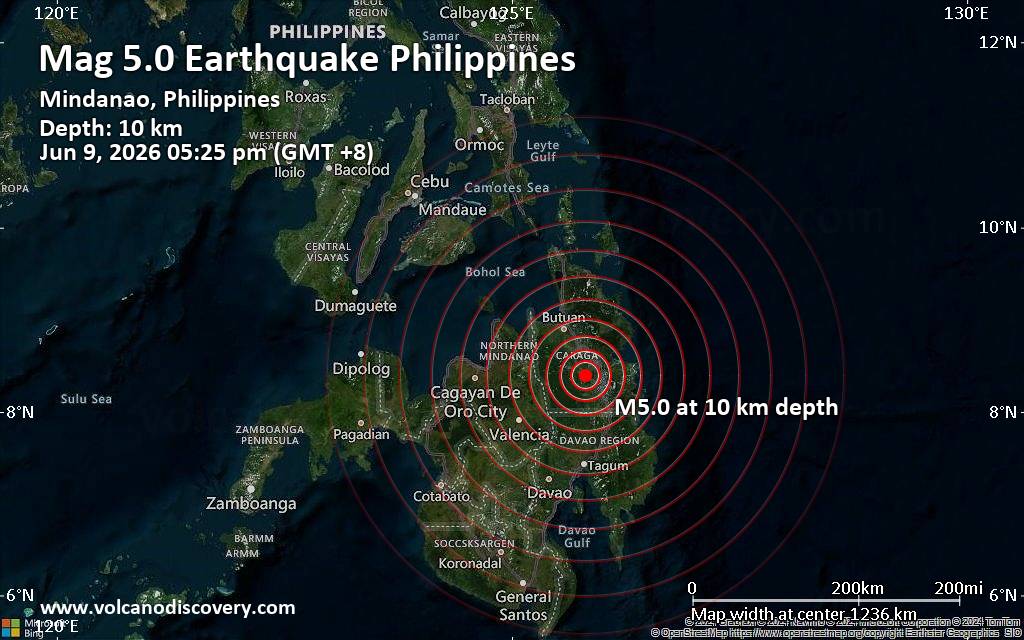
Significant earthquake of magnitude 5.0 just reported 22 km southwest of Prosperidad, Philippines
• Strong mag. 5.0 earthquake - Mindanao, Philippines, on Tuesday, Jun 9, 2026...
• World Earthquake Report for Tuesday, 9 June 2026
• Moderate magnitude 4.8 earthquake 110 km southwest of Tambolaka, Indonesia
• Moderate mag. 4.8 earthquake - South of Sumbawa, Indonesia, on Tuesday, Jun...
• Volcano earthquake report for Tuesday, 9 Jun 2026
|

#47807
Fri 05 Mar 2010 09:04:AM
|
Joined: Feb 2001
Posts: 678,976
Launch Director
|
OP

Launch Director
Joined: Feb 2001
Posts: 678,976 |
HUBBLE SPACE TELESCOPE - Continuing to Collect World Class Science
�
DAILY REPORT��� ��#5046
�
PERIOD COVERED: 5am March 4 - 5am March 5, 2010 (DOY 063/10:00z-064/10:00z)
�
OBSERVATIONS SCHEDULED
�
COS/FUV/STIS/CCD/MA1 11592
�
Testing the Origin(s) of the Highly Ionized High-Velocity Clouds: A
Survey of Galactic Halo Stars at z>3 kpc
�
Cosmological simulation predicts that highly ionized gas plays an
important role in the formation and evolution of galaxies and their
interplay with the intergalactic medium. The NASA HST and FUSE missions
have revealed high-velocity CIV and OVI absorption along extragalactic
sightlines through the Galactic halo. These highly ionized high-velocity
clouds (HVCs) could cover 85% of the sky and have a detection rate
higher than the HI HVCs. Two competing, equally exciting, theories may
explain the origin of these highly ionized HVCs: 1) the "Galactic"
theory, where the HVCs are the result of feedback processes and trace
the disk-halo mass exchange, perhaps including the accretion of matter
condensing from an extended corona; 2) the "Local Group" theory, where
they are part of the local warm-hot intergalactic medium, representing
some of the missing baryonic matter of the Universe. Only direct
distance determinations can discriminate between these models. Our group
has found that some of these highly ionized HVCs have a Galactic origin,
based on STIS observations of one star at z<5.3 kpc. We propose an HST
FUV spectral survey to search for and characterize the high velocity NV,
CIV, and SiIV interstellar absorption toward 24 stars at much larger
distances than any previous searches (4<d<21 kpc, 3<|z|<13 kpc). COS
will provide atomic to highly ionized species (e.g.,OI, CII, CIV, SiIV)
that can be observed at sufficient resolution (R~22, 000) to not only
detect these highly ionized HVCs but also to model their properties and
understand their physics and origins. This survey is only possible
because of the high sensitivity of COS in the FUV spectral range.
�
STIS/CCD 11844
�
CCD Dark Monitor Part 1
�
The purpose of this proposal is to monitor the darks for the STIS CCD.
�
STIS/CCD 11846
�
CCD Bias Monitor-Part 1
�
The purpose of this proposal is to monitor the bias in the 1x1, 1x2,
2x1, and 2x2 bin settings at gain=1, and 1x1 at gain = 4, to build up
high-S/N superbiases and track the evolution of hot columns.
�
STIS/CCD/FGS 11848
�
CCD Read Noise Monitor
�
This proposal measures the read noise of all the amplifiers (A, B, C, D)
on the STIS CCD using pairs of bias frames. Full-frame and binned
observations are made in both Gain 1 and Gain 4, with binning factors of
1x1, 1x2, 2x1, and 2x2. All exposures are internals. Pairs of visits are
scheduled monthly for the first four months and then bi-monthly after
that.
�
STIS/CCD/MA2 11568
�
A SNAPSHOT Survey of the Local Interstellar Medium: New NUV Observations
of Stars with Archived FUV Observations
�
We propose to obtain high-resolution STIS E230H SNAP observations of
MgII and FeII interstellar absorption lines toward stars within 100
parsecs that already have moderate or high-resolution far-UV (FUV),
900-1700 A, observations available in the MAST Archive. Fundamental
properties, such as temperature, turbulence, ionization, abundances, and
depletions of gas in the local interstellar medium (LISM) can be
measured by coupling such observations. Due to the wide spectral range
of STIS, observations to study nearby stars also contain important data
about the LISM embedded within their spectra. However, unlocking this
information from the intrinsically broad and often saturated FUV
absorption lines of low-mass ions, (DI, CII, NI, OI), requires first
understanding the kinematic structure of the gas along the line of
sight. This can be achieved with high resolution spectra of high-mass
ions, (FeII, MgII), which have narrow absorption lines, and can resolve
each individual velocity component (interstellar cloud). By obtaining
short (~10 minute) E230H observations of FeII and MgII, for stars that
already have moderate or high- resolution FUV spectra, we can increase
the sample of LISM measurements, and thereby expand our knowledge of the
physical properties of the gas in our galactic neighborhood. STIS is the
only instrument capable of obtaining the required high resolution data
now or in the foreseeable future.
�
WFC3/ACS/IR 11677
�
Is 47 Tuc Young? Measuring its White Dwarf Cooling Age and Completing a
Hubble Legacy
�
With this proposal we will firmly establish the age of 47 Tuc from its
cooling white dwarfs. 47 Tuc is the nearest and least reddened of the
metal-rich disk globular clusters. It is also the template used for
studying the giant branches of nearby resolved galaxies. In addition,
the age sensitive magnitude spread between the main sequence turnoff and
horizontal branch is identical for 47 Tuc, two bulge globular clusters
and the bulge field population. A precise relative age constraint for 47
Tuc, compared to the halo clusters M4 and NGC 6397, both of which we
recently dated via white dwarf cooling, would therefore constrain when
the bulge formed relative to the old halo globular clusters. Of
particular interest is that with the higher quality ACS data on NGC
6397, we are now capable with the technique of white dwarf cooling of
determining ages to an accuracy of +/-0.4 Gyrs at the 95% confidence
level. Ages derived from the cluster turnoff are not currently capable
of reaching this precision. The important role that 47 Tuc plays in
galaxy formation studies, and as the metal-rich template for the
globular clusters, makes the case for a white dwarf cooling age for this
metal-rich cluster compelling.
�
Several recent analyses have suggested that 47 Tuc is more than 2 Gyrs
younger than the Galactic halo. Others have suggested an age similar to
that of the most metal poor globular clusters. The current situation is
clearly uncertain and obviously a new approach to age dating this
important cluster is required.
�
With the observations of 47 Tuc, this project will complete a legacy for
HST. It will be the third globular cluster observed for white dwarf
cooling; the three covering almost the full metallicity range of the
cluster system. Unless JWST has its proposed bluer filters (700 and 900
nm) this science will not be possible perhaps for decades until a large
optical telescope is again in space. Ages for globular clusters from the
main sequence turnoff are less precise than those from white dwarf
cooling making the science with the current proposal truly urgent.
�
WFC3/UV 11919
�
WFC3 UVIS PSF Wings
�
The UVIS PSF wings will be evaluated at 5 field points (near the field
center and corners) in two filters (F275W and F625W) to check for image
stability. Subarray images of a moderately bright, isolated star will be
obtained at each field position with a series of increasing exposure
times designed to permit construction of a very high SNR PSF with
dynamic range sufficient to evaluate the wing intensity to >5 arcsec
radius. Deep, saturated full field images will also be obtained at each
field point to permit evaluation of the wings at larger radii. The
images will also permit examination of potential straylight effects,
image persistence and electronic cross-talk.
�
WFC3/UVI/IR 11557
�
The Nature of Low-Ionization BAL QSOs
�
The rare subclass of optically-selected QSOs known as low-ionization
broad absorption line (LoBAL) QSOs show signs of high-velocity gas
outflows and reddened continua indicative of dust obscuration. Recent
studies show that galaxies hosting LoBAL QSOs tend to be ultraluminous
infrared systems that are undergoing mergers, and that have dominant
young (< 100 Myr) stellar populations. Such studies support the idea
that LoBAL QSOs represent a short- lived phase early in the life of
QSOs, when powerful AGN-driven winds are blowing away the dust and gas
surrounding the QSO. If so, understanding LoBALs would be critical in
the study of phenomena regulating black hole and galaxy evolution, such
as AGN feedback and the early stages of nuclear accretion. These
results, however, come from very small samples that may have serious
selection biases. We are therefore taking a more aggressive approach by
conducting a systematic multiwavelength study of a volume limited sample
of LoBAL QSOs at 0.5 < z < 0.6 drawn from SDSS. We propose to image
their host galaxies in two bands using WFC3/UVIS and WFC3/IR to study
the morphologies for signs of recent tidal interactions and to map their
interaction and star forming histories. We will thus determine whether
LoBAL QSOs are truly exclusively found in young merging systems that are
likely to be in the early stages of nuclear accretion.
�
WFC3/UVIS 11905
�
WFC3 UVIS CCD Daily Monitor
�
The behavior of the WFC3 UVIS CCD will be monitored daily with a set of
full-frame, four-amp bias and dark frames. A smaller set of 2Kx4K
subarray biases are acquired at less frequent intervals throughout the
cycle to support subarray science observations. The internals from this
proposal, along with those from the anneal procedure (Proposal 11909),
will be used to generate the necessary superbias and superdark reference
files for the calibration pipeline (CDBS).
�
WFC3/UVIS/IR 11644
�
A Dynamical-Compositional Survey of the Kuiper Belt: A New Window Into
the Formation of the Outer Solar System
�
The eight planets overwhelmingly dominate the solar system by mass, but
their small numbers, coupled with their stochastic pasts, make it
impossible to construct a unique formation history from the dynamical or
compositional characteristics of them alone. In contrast, the huge
numbers of small bodies scattered throughout and even beyond the
planets, while insignificant by mass, provide an almost unlimited number
of probes of the statistical conditions, history, and interactions in
the solar system. To date, attempts to understand the formation and
evolution of the Kuiper Belt have largely been dynamical simulations
where a hypothesized starting condition is evolved under the
gravitational influence of the early giant planets and an attempt is
made to reproduce the current observed populations. With little
compositional information known for the real Kuiper Belt, the test
particles in the simulation are free to have any formation location and
history as long as they end at the correct point. Allowing compositional
information to guide and constrain the formation, thermal, and
collisional histories of these objects would add an entire new dimension
to our understanding of the evolution of the outer solar system. While
ground based compositional studies have hit their flux limits already
with only a few objects sampled, we propose to exploit the new
capabilities of WFC3 to perform the first ever large-scale
dynamical-compositional study of Kuiper Belt Objects (KBOs) and their
progeny to study the chemical, dynamical, and collisional history of the
region of the giant planets. The sensitivity of the WFC3 observations
will allow us to go up to two magnitudes deeper than our ground based
studies, allowing us the capability of optimally selecting a target list
for a large survey rather than simply taking the few objects that can be
measured, as we have had to do to date. We have carefully constructed a
sample of 120 objects which provides both overall breadth, for a general
understanding of these objects, plus a large enough number of objects in
the individual dynamical subclass to allow detailed comparison between
and within these groups. These objects will likely define the core
Kuiper Belt compositional sample for years to come. While we have many
specific results anticipated to come from this survey, as with any
project where the field is rich, our current knowledge level is low, and
a new instrument suddenly appears which can exploit vastly larger
segments of the population, the potential for discovery -- both
anticipated and not -- is extraordinary.
�
FLIGHT OPERATIONS SUMMARY:
�
Significant Spacecraft Anomalies: (The following are preliminary reports
of potential non-nominal performance that will be investigated.)
�
HSTARS: (None)
�
COMPLETED OPS REQUEST: (None)
�
COMPLETED OPS NOTES: (None)
�
������� ������ ��������SCHEDULED SUCCESSFUL
FGS GSAcq �� �����������09������ ��� 09
FGS REAcq �� �����������08������ ��� 08
OBAD with Maneuver 05������ ��� 05
�
SIGNIFICANT EVENTS:
�
FLASH REPORT:
COS
- At 063/14:59 COS FSW 4.10 was successfully installed.
�
ACS
- At 063/16:40 ACS FSW 5.14 was successfully installed.
�
STIS
- At 063/18:00 STIS FSW 5.00 was successfully installed.
David Cottle
UBB Owner & Administrator
|
|



CMS The Best Conveyancing solicitors conveyancing quotes throughout the UK
For any webhosting enquiries please email webmaster@aus-city.com
|
|
Entire Thread
|
 Daily Report 5046
|
Webmaster
|
Fri 05 Mar 2010 09:04:AM
|
|
Forums60
Topics780,279
Posts815,037
Members2,960
| |
Most Online22,463
May 9th, 2026
|
|
|