|
0 members (),
710
guests, and
41
robots. |
|
Key:
Admin,
Global Mod,
Mod
|
|
S |
M |
T |
W |
T |
F |
S |
|
|
1
|
2
|
3
|
4
|
5
|
6
|
|
7
|
8
|
9
|
10
|
11
|
12
|
13
|
|
14
|
15
|
16
|
17
|
18
|
19
|
20
|
|
21
|
22
|
23
|
24
|
25
|
26
|
27
|
|
28
|
29
|
30
|
|
|
|
|
|
There are no members with birthdays on this day. |
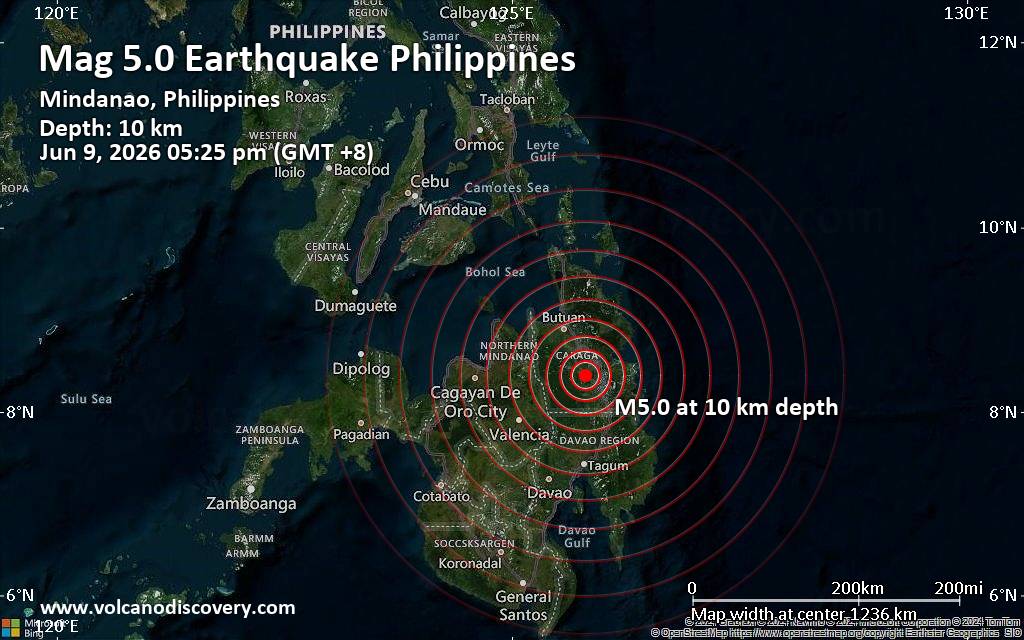
Significant earthquake of magnitude 5.0 just reported 22 km southwest of Prosperidad, Philippines
• Strong mag. 5.0 earthquake - Mindanao, Philippines, on Tuesday, Jun 9, 2026...
• World Earthquake Report for Tuesday, 9 June 2026
• Moderate magnitude 4.8 earthquake 110 km southwest of Tambolaka, Indonesia
• Moderate mag. 4.8 earthquake - South of Sumbawa, Indonesia, on Tuesday, Jun...
• Volcano earthquake report for Tuesday, 9 Jun 2026
|

#47835
Tue 09 Mar 2010 02:33:AM
|
Joined: Feb 2001
Posts: 678,976
Launch Director
|
OP

Launch Director
Joined: Feb 2001
Posts: 678,976 |
HUBBLE SPACE TELESCOPE - Continuing to Collect World Class Science
�
DAILY REPORT��� ��#5047
�
PERIOD COVERED: 5am March 5 - 5am March 8, 2010 (DOY 064/10:00z-067/10:00z)
�
OBSERVATIONS SCHEDULED
�
WFC3/UV/ACS/WFC 12050
�
20th Anniversary of HST Launch
�
The 20th anniversary of HST's launch on April 24, 2010 will be a
significant milestone both in the Hubble mission and in the history of
U.S. space astronomy. Already plans are in place for many activities
surrounding this anniversary that take advantage of the "teachable
moment" afforded by this event. A new, high-impact image from Hubble is
a necessary component of this mix. We are proposing here to meet that
need with new observations of a dramatic region of the Carina Nebula
only partially observed previously with Hubble. The release of the large
mosaic of the Carina Nebula for HST's 17th anniversary was one of the
largest Hubble images ever released (Fig. 1). It contains numerous
dramatic details including the pillar containing HH 901 (Fig. 2) which
was itself released as a separate detail image. What is not widely
realized, however, is that the HST data in the Carina mosaic is limited
to H-alpha only. The oxygen (502 nm) and sulfur (673 nm) images were
obtained with the MOSAIC camera at CTIO. These low resolution images
were combined with the much higher resolution HST data to produce the
final color image composite. When the full mosaic is viewed, the loss of
resolution is an acceptable compromise. However, when zooming in on
details, the effect is noticeable. We have selected the most dramatic
portion to return to with WFC3 to obtain HST resolution in a complete
filter set. In order to highlight the new capabilities of WFC3 as well
as foreshadowing the capabilities of JWST, we will obtain a full 3-color
composite in the IR channel of WFC3 in addition
�
S/C 12046
�
COS FUV DCE Memory Dump
�
Whenever the FUV detector high voltage is on, count rate and current
draw information is collected, monitored, and saved to DCE memory. Every
10 msec the detector samples the currents from the HV power supplies
(HVIA, HVIB) and the AUX power supply (AUXI). The last 1000 samples are
saved in memory, along with a histogram of the number of occurrences of
each current value.
�
In the case of a HV transient (known as a "crackle" on FUSE), where one
of these currents exceeds a preset threshold for a persistence time, the
HV will shut down, and the DCE memory will be dumped and examined as
part of the recovery procedure. However, if the current exceeds the
threshold for less than the persistence time (a "mini-crackle" in FUSE
parlance), there is no way to know without dumping DCE memory. By
dumping and examining the histograms regularly, we will be able to
monitor any changes in the rate of "mini-crackles" and thus learn
something about the state of the detector.
�
ACS/WFC 11995
�
CCD Daily Monitor (Part 2)
�
This program comprises basic tests for measuring the read noise and dark
current of the ACS WFC and for tracking the growth of hot pixels. The
recorded frames are used to create bias and dark reference images for
science data reduction and calibration. This program will be executed
four days per week (Mon, Wed, Fri, Sun) for the duration of Cycle 17. To
facilitate scheduling, this program is split into three proposals. This
proposal covers 320 orbits (20 weeks) from 1 February 2010 to 20 June
2010.
�
WFC3/IR/S/C 11929
�
IR Dark Current Monitor
�
Analyses of ground test data showed that dark current signals are more
reliably removed from science data using darks taken with the same
exposure sequences as the science data, than with a single dark current
image scaled by desired exposure time. Therefore, dark current images
must be collected using all sample sequences that will be used in
science observations. These observations will be used to monitor changes
in the dark current of the WFC3-IR channel on a day-to-day basis, and to
build calibration dark current ramps for each of the sample sequences to
be used by Gos in Cycle 17. For each sample sequence/array size
combination, a median ramp will be created and delivered to the
calibration database system (CDBS).
�
WFC3/UVIS 11912
�
UVIS Internal Flats
�
This proposal will be used to assess the stability of the flat field
structure for the UVIS detector throughout the 15 months of Cycle 17.
The data will be used to generate on-orbit updates for the delta-flat
field reference files used in the WFC3 calibration pipeline, if
significant changes in the flat structure are seen.
�
WFC3/UVIS 11908
�
Cycle 17: UVIS Bowtie Monitor
�
Ground testing revealed an intermittent hysteresis type effect in the
UVIS detector (both CCDs) at the level of ~1%, lasting hours to days.
Initially found via an unexpected bowtie-shaped feature in flatfield
ratios, subsequent lab tests on similar e2v devices have since shown
that it is also present as simply an overall offset across the entire
CCD, i.e., a QE offset without any discernable pattern. These lab tests
have further revealed that overexposing the detector to count levels
several times full well fills the traps and effectively neutralizes the
bowtie. Each visit in this proposal acquires a set of three 3x3 binned
internal flatfields: the first unsaturated image will be used to detect
any bowtie, the second, highly exposed image will neutralize the bowtie
if it is present, and the final image will allow for verification that
the bowtie is gone.
�
WFC3/UVIS 11907
�
UVIS Cycle 17 Contamination Monitor
�
The UV throughput of WFC3 during Cycle 17 is monitored via weekly
standard star observations in a subset of key filters covering 200-600nm
and F606W, F814W as controls on the red end. The data will provide a
measure of throughput levels as a function of time and wavelength,
allowing for detection of the presence of possible contaminants.
�
WFC3/UVIS 11905
�
WFC3 UVIS CCD Daily Monitor
�
The behavior of the WFC3 UVIS CCD will be monitored daily with a set of
full-frame, four-amp bias and dark frames. A smaller set of 2Kx4K
subarray biases are acquired at less frequent intervals throughout the
cycle to support subarray science observations. The internals from this
proposal, along with those from the anneal procedure (Proposal 11909),
will be used to generate the necessary superbias and superdark reference
files for the calibration pipeline (CDBS).
�
WFC3/UVIS 11903
�
UVIS Photometric Zero Points
�
This proposal obtains the photometric zero points in 53 of the 62
UVIS/WFC3 filters: the 18 broad-band filters, 8 medium-band filters, 16
narrow-band filters, and 11 of the 20 quad filters (those being used in
cycle 17). The observations will be primary obtained by observing the
hot DA white dwarf standards GD153 and G191-B2B. A redder secondary
standard, P330E, will be observed in a subset of the filters to provide
color corrections. Repeat observations in 16 of the most widely used
cycle 17 filters will be obtained once per month for the first three
months, and then once every second month for the duration of cycle 17,
alternating and depending on target availability. These observations
will enable monitoring of the stability of the photometric system.
Photometric transformation equations will be calculated by comparing the
photometry of stars in two globular clusters, 47 Tuc and NGC 2419, to
previous measurements with other telescopes/instruments.
�
COS/NUV 11894
�
NUV Detector Dark Monitor
�
The purpose of this proposal is to measure the NUV detector dark rate by
taking long science exposures with no light on the detector. The
detector dark rate and spatial distribution of counts will be compared
to pre-launch and SMOV data in order to verify the nominal operation of
the detector. Variations of count rate as a function of orbital position
will be analyzed to find dependence of dark rate on proximity to the
SAA. Dependence of dark rate as function of time will also be tracked.
�
ACS/WFC3 11887
�
CCD Stability Monitor
�
This program will verify that the low frequency flat fielding, the
photometry, and the geometric distortion are stable in time and across
the field of view of the CCD arrays. A moderately crowded stellar field
in the cluster 47 Tuc is observed with the ACS (at the cluster core) and
WFC3 (6 arcmin West of the cluster core) using the full suite of broad
and narrow band imaging filters. The positions and magnitudes of objects
will be used to monitor local and large scale variations in the plate
scale and the sensitivity of the detectors and to derive an independent
measure of the detector CTE. The UV sensitivity for the SBC and ACS will
be addressed in the UV contamination monitor program (11886, PI=Smith).
�
One additional orbit will be obtained at the beginning of the cycle will
allow a verification of the CCD gain ratios for WFC3 using gain 2.0,
1.4, 1.0, 0.5 and for ACS using gain 4.0 and 2.0. In addition, one
subarray exposure with the WFC3 will allow a verification that
photometry obtained in full-frame and in sub-array modes are repeatable
to better than 1%. This test is important for the ACS Photometric
Cross-Calibration program (11889, PI=Bohlin) which uses sub-array
exposures.
�
ACS/SBC 11886
�
UV Contamination Monitor
�
The observations consist of imaging and spectroscopy with SBC and HRC of
the cluster NGC 6681 in order to monitor the temporal evolution of the
UV sensitivity of the SBC and the HRC.
�
STIS/CC 11847
�
CCD Bias Monitor-Part 2
�
Monitor the bias in the 1x1, 1x2, 2x1, and 2x2 bin settings at gain=1,
and 1x1 at gain = 4, to build up high-S/N superbiases and track the
evolution of hot columns.
�
STIS/CC 11845
�
CCD Dark Monitor Part 2
�
Monitor the darks for the STIS CCD.
�
COS/NUV/FUV 11728
�
The Impact of Starbursts on the Gaseous Halos of Galaxies
�
Perhaps the most important (yet uncertain) aspects of galaxy evolution
are the processes by which galaxies accrete gas and by which the
resulting star formation and black hole growth affects this accreting
gas. It is believed that both the form of the accretion and the nature
of the feedback change as a function of the galaxy mass. At low mass the
gas comes in cold and the feedback is provided by massive stars. At high
mass, the gas comes in hot, and the feedback is from an AGN. The
changeover occurs near the mass where the galaxy population transitions
from star-forming galaxies to red and dead ones. The population of red
and dead galaxies is building with cosmic time, and it is believed that
feedback plays an important role in this process: shutting down star
formation by heating and/or expelling the reservoir of cold halo gas. To
investigate these ideas, we propose to use COS far-UV spectra of
background QSOs to measure the properties of the halo gas in a sample of
galaxies near the transition mass that have undergone starbursts within
the past 100 Myr to 1 Gyr. The galactic wind associated with the
starburst is predicted to have affected the properties of the gaseous
halo. To test this, we will compare the properties of the halos of the
post-starburst galaxies to those of a control sample of galaxies matched
in mass and QSO impact parameter. Do the halos of the post-starburst
galaxies show a higher incidence rate of Ly-Alpha and metal
absorption-lines? Are the kinematics of the halo gas more disturbed in
the post-starbursts? Has the wind affected the ionization state and/or
the metallicity of the halo? These data will provide fresh new insights
into the role of feedback from massive stars on the evolution of
galaxies, and may also offer clues about the properties of the QSO metal
absorption-line systems at high-redshift .
�
WFC3/IR 11696
�
Infrared Survey of Star Formation Across Cosmic Time
�
We propose to use the unique power of WFC3 slitless spectroscopy to
measure the evolution of cosmic star formation from the end of the
reionization epoch at z>6 to the close of the galaxy- building era at
z~0.3.Pure parallel observations with the grisms have proven to be
efficient for identifying line emission from galaxies across a broad
range of redshifts. The G102 grism on WFC3 was designed to extend this
capability to search for Ly-alpha emission from the first galaxies.
Using up to 250 orbits of pure parallel WFC3 spectroscopy, we will
observe about 40 deep (4-5 orbit) fields with the combination of G102
and G141, and about 20 shallow (2-3 orbit) fields with G141 alone.
�
Our primary science goals at the highest redshifts are: (1) Detect Lya
in ~100 galaxies with z>5.6 and measure the evolution of the Lya
luminosity function, independent of of cosmic variance; 2) Determine the
connection between emission line selected and continuum-break selected
galaxies at these high redshifts, and 3) Search for the proposed
signature of neutral hydrogen absorption at re-ionization. At
intermediate redshifts we will (4) Detect more than 1000 galaxies in
Halpha at 0.5<z<1.8 to measure the evolution of the extinction-corrected
star formation density across the peak epoch of star formation. This is
over an order-of-magnitude improvement in the current statistics, from
the NICMOS Parallel grism survey. (5) Trace ``cosmic downsizing" from
0.5<z<2.2; and (6) Estimate the evolution in reddening and metallicty in
star- forming galaxies and measure the evolution of the Seyfert
population. For hundreds of spectra we will be able to measure one or
even two line pair ratios -- in particular, the Balmer decrement and
[OII]/[OIII] are sensitive to gas reddening and metallicity. As a bonus,
the G102 grism offers the possibility of detecting Lya emission at
z=7-8.8.
�
To identify single-line Lya emitters, we will exploit the wide
0.8--1.9um wavelength coverage of the combined G102+G141 spectra. All
[OII] and [OIII] interlopers detected in G102 will be reliably separated
from true LAEs by the detection of at least one strong line in the G141
spectrum, without the need for any ancillary data. We waive all
proprietary rights to our data and will make high-level data products
available through the ST/ECF.
�
WFC3/UV/IR 11664
�
The WFC3 Galactic Bulge Treasury Program: Populations, Formation
History, and Planets
�
Exploiting the full power of the Wide Field Camera 3 (WFC3), we propose
deep panchromatic imaging of four fields in the Galactic bulge. These
data will enable a sensitive dissection of its stellar populations,
using a new set of reddening-free photometric indices we have
constructed from broad-band filters across UV, optical, and near-IR
wavelengths. These indices will provide accurate temperatures and
metallicities for hundreds of thousands of individual bulge stars.
Proper motions of these stars derived from multi-epoch observations will
allow separation of pure bulge samples from foreground disk
contamination. Our catalogs of proper motions and panchromatic
photometry will support a wide range of bulge studies.
�
Using these photometric and astrometric tools, we will reconstruct the
detailed star-formation history as a function of position within the
bulge, and thus differentiate between rapid- and extended-formation
scenarios. We will also measure the dependence of the stellar mass
function on metallicity, revealing how the characteristic mass of star
formation varies with chemistry. Our sample of bulge stars with accurate
metallicities will include 12 candidate hosts of extrasolar planets.
Planet frequency is correlated with metallicity in the solar
neighborhood; our measurements will extend this knowledge to a remote
environment with a very distinct chemistry.
�
Our proposal also includes observations of six well-studied globular and
open star clusters; these observations will serve to calibrate our
photometric indices, provide empirical population templates, and
transform the theoretical isochrone libraries into the WFC3 filter
system. Besides enabling our own program, these products will provide
powerful new tools for a host of other stellar-population investigations
with HST/WFC3. We will deliver all of the products from this Treasury
Program to the community in a timely fashion.
�
WFC3/IR/ACS/WFC 11663
�
Formation and Evolution of Massive Galaxies in the Richest Environments
at 1.5 < z < 2.0
�
We propose to image seven 1.5<z<2 clusters and groups from the IRAC
Shallow Cluster Survey with WFC3 and ACS in order to study the formation
and evolution of massive galaxies in the richest environments in the
Universe in this important redshift range. We will measure the evolution
of the sizes and morphologies of massive cluster galaxies, as a function
of redshift, richness, radius and local density. In combination with
allocated Keck spectroscopy, we will directly measure the dry merger
fraction in these clusters, as well as the evolution of Brightest
Cluster Galaxies (BCGs) over this redshift range where clear model
predictions can be confronted. Finally we will measure both the epoch of
formation of the stellar populations and the assembly history of that
stellar mass, the two key parameters in the modern galaxy formation
paradigm.
�
WFC3/UVIS 11657
�
The Population of Compact Planetary Nebulae in the Galactic Disk
�
We propose to secure narrow- and broad-band images of compact planetary
nebulae (PNe) in the Galactic Disk to study the missing link of the
early phases of post-AGB evolution. Ejected AGB envelopes become PNe
when the gas is ionized. PNe expand, and, when large enough, can be
studied in detail from the ground. In the interim, only the HST
capabilities can resolve their size, morphology, and central stars. Our
proposed observations will be the basis for a systematic study of the
onset of morphology. Dust properties of the proposed targets will be
available through approved Spitzer/IRS spectra, and so will the
abundances of the alpha- elements. We will be able thus to explore the
interconnection of morphology, dust grains, stellar evolution, and
populations. The target selection is suitable to explore the nebular and
stellar properties across the galactic disk, and to set constraints on
the galactic evolutionary models through the analysis of metallicity and
population gradients.
�
ACS/WFC3 11604
�
The Nuclear Structure of OH Megamaser Galaxies
�
We propose a snapshot survey of a complete sample of 80 OH megamaser
galaxies. Each galaxy will be imaged with the ACS/WFC through F814W and
a linear ramp filter (FR656N or FR716N or FR782N or FR853N) allowing us
to study both the spheroid and the gas morphology in Halpha + [N II]. We
will use the 9% ramps FR647M (5370-7570 angstroms) centered at 7000
angstroms and FR914M (7570-10, 719 angstroms) 8000 angstroms for
continuum subtraction for the high and low z objects respectively. OH
megamaser galaxies (OHMG) form an important class of ultraluminous
IR-galaxies (ULIRGs) whose maser lines emit QSO-like luminosities.
ULIRGs in general are associated with recent mergers but it is often
unclear whether their power output is dominated by starbursts or a
hidden QSO because of the high absorbing columns which hide their nuclei
even at X-ray wavelengths. In contrast, OHMG exhibit strong evidence for
the presence of an energetically important and recently triggered active
nucleus. In particular it is clear that much of the gas must have
already collapsed to form a nuclear disk which may be the progenitor of
a circum-nuclear torus, a key element of the unified scheme of AGN. A
great advantage of studying OHMG systems over the general ULIRG
population, is that the circum-nuclear disks are effectively "fixed" at
an inner, edge on, orientation, eliminating varying inclination as a
nuisance parameter. We will use the HST observations in conjunction with
existing maser and spectroscopic data to construct a detailed picture of
the circum-nuclear regions of a hitherto relatively neglected class of
galaxy that may hold the key to understanding the relationship between
galaxy mergers, nuclear star-formation, and the growth of massive black
holes and the triggering of nuclear activity.
�
WFC3/ACS/IR 11600
�
Star Formation, Extinction, and Metallicity at 0.7<z<1.5: H-Alpha Fluxes
and Sizes from a Grism Survey of GOODS-N
�
The global star formation rate (SFR) is ~10x higher at z=1 than today.
This could be due to drastically elevated SFR in some fraction of
galaxies, such as mergers with central bursts, or a higher SFR across
the board. Either means that the conditions in z=1 star forming galaxies
could be quite different from local objects. The next step beyond
measuring the global SFR is to determine the dependence of SFR,
obscuration, metallicity, and size of the star-forming region on galaxy
mass and redshift. However, SFR indicators at z=1 typically apply local
calibrations for UV, [O II] and far-IR, and do not agree with each other
on a galaxy-by-galaxy basis. Extinction, metallicity, and dust
properties cause uncontrolled offsets in SFR calibrations. The great
missing link is Balmer H-alpha, the most sensitive probe of SFR. We
propose a slitless WFC3/G141 IR grism survey of GOODS-N, at 2
orbits/pointing. It will detect Ha+[N II] emission from 0.7<z<1.5, to
L(Ha) = 1.7 x 10^41 erg/sec at z=1, measuring H-alpha fluxes and sizes
for > 600 galaxies, and a small number of higher-redshift emitters. This
will produce: an emission-line redshift survey unbiased by magnitude and
color selection; star formation rates as a function of galaxy
properties, e.g. stellar mass and morphology/mergers measured by ACS;
comparisons of SFRs from H-alpha to UV and far-IR indicators;
calibrations of line ratios of H-alpha to important nebular lines such
as [O II] and H-beta, measuring variations in metallicity and extinction
and their effect on SFR estimates; and the first measurement of scale
lengths of the H-alpha emitting, star- forming region in a large sample
of z~1 sources.
�
COS/NUV/FUV 11598
�
How Galaxies Acquire their Gas: A Map of Multiphase Accretion and
Feedback in Gaseous Galaxy Halos
�
We propose to address two of the biggest open questions in galaxy
formation - how galaxies acquire their gas and how they return it to the
IGM - with a concentrated COS survey of diffuse multiphase gas in the
halos of SDSS galaxies at z = 0.15 - 0.35. Our chief science goal is to
establish a basic set of observational facts about the physical state,
metallicity, and kinematics of halo gas, including the sky covering
fraction of hot and cold material, the metallicity of infall and
outflow, and correlations with galaxy stellar mass, type, and color -
all as a function of impact parameter from 10 - 150 kpc. Theory suggests
that the bimodality of galaxy colors, the shape of the luminosity
function, and the mass-metallicity relation are all influenced at a
fundamental level by accretion and feedback, yet these gas processes are
poorly understood and cannot be predicted robustly from first
principles. We lack even a basic observational assessment of the
multiphase gaseous content of galaxy halos on 100 kpc scales, and we do
not know how these processes vary with galaxy properties. This ignorance
is presently one of the key impediments to understanding galaxy
formation in general. We propose to use the high-resolution gratings
G130M and G160M on the Cosmic Origins Spectrograph to obtain sensitive
column density measurements of a comprehensive suite of multiphase ions
in the spectra of 43 z < 1 QSOs lying behind 43 galaxies selected from
the Sloan Digital Sky Survey. In aggregate, these sightlines will
constitute a statistically sound map of the physical state and
metallicity of gaseous halos, and subsets of the data with cuts on
galaxy mass, color, and SFR will seek out predicted variations of gas
properties with galaxy properties. Our interpretation of these data will
be aided by state-of-the-art hydrodynamic simulations of accretion and
feedback, in turn providing information to refine and test such models.
We will also use Keck, MMT, and Magellan (as needed) to obtain optical
spectra of the QSOs to measure cold gas with Mg II, and optical spectra
of the galaxies to measure SFRs and to look for outflows. In addition to
our other science goals, these observations will help place the Milky
Way's population of multiphase, accreting High Velocity Clouds (HVCs)
into a global context by identifying analogous structures around other
galaxies. Our program is designed to make optimal use of the unique
capabilities of COS to address our science goals and also generate a
rich dataset of other absorption-line systems
�
WFC3/UVIS 11588
�
Galaxy-Scale Strong Lenses from the CFHTLS Survey
�
We aim to investigate the origin and evolution of early-type galaxies
using gravitational lensing, modeling the mass profiles of objects over
a wide range of redshifts. The low redshift (z = 0.2) sample is already
in place following the successful HST SLACS survey; we now propose to
build up and analyze a sample of comparable size (~50 systems) at high
redshift (0.4 < z < 0.9) using HST WFC3 Snapshot observations of lens
systems identified by the SL2S collaboration in the CFHT legacy survey.
�
WFC3/UV 11581
�
Searching for Pulsations from a Helium White Dwarf Companion to a
Millisecond Pulsar
�
The low mass white dwarf (WD) companion to the 3.26 ms pulsar PSR
J1911-5958A offers an unprecedented opportunity for seismological study
of the interior of a helium core WD. While much more massive
carbon/oxygen core WDs are observed to pulsate in normal modes of
oscillation called g-modes (known as ZZ Ceti stars), no helium core
pulsator is known. By extrapolating the boundaries of the ZZ Ceti
instability strip downward in surface gravity by a factor of 20 below
any known pulsator, we find that the effective temperature of this WD
makes it an excellent candidate to search for pulsation. Detection of
g-mode pulsations in the lightcurve would have a transformative effect
on the field of WD pulsations, as this would allow the first
seismological study of the interior of a helium core WD, and the low
gravity strongly constrains theories for the driving and amplitudes of
pulsations. We show that with 3 orbits of HST, we will detect
photometric variations with amplitudes of 1%, lower than typically seen
in other hydrogen-dominated ZZ Ceti stars. A set of measured mode
periods would also constrain the thickness of the presumed stably
hydrogen burning shell, and help us determine its age more securely.
�
STIS/CCD/MA2 11568
�
A SNAPSHOT Survey of the Local Interstellar Medium: New NUV Observations
of Stars with Archived FUV Observations
�
We propose to obtain high-resolution STIS E230H SNAP observations of
MgII and FeII interstellar absorption lines toward stars within 100
parsecs that already have moderate or high-resolution far-UV (FUV),
900-1700 A, observations available in the MAST Archive. Fundamental
properties, such as temperature, turbulence, ionization, abundances, and
depletions of gas in the local interstellar medium (LISM) can be
measured by coupling such observations. Due to the wide spectral range
of STIS, observations to study nearby stars also contain important data
about the LISM embedded within their spectra. However, unlocking this
information from the intrinsically broad and often saturated FUV
absorption lines of low-mass ions, (DI, CII, NI, OI), requires first
understanding the kinematic structure of the gas along the line of
sight. This can be achieved with high resolution spectra of high-mass
ions, (FeII, MgII), which have narrow absorption lines, and can resolve
each individual velocity component (interstellar cloud). By obtaining
short (~10 minute) E230H observations of FeII and MgII, for stars that
already have moderate or high- resolution FUV spectra, we can increase
the sample of LISM measurements, and thereby expand our knowledge of the
physical properties of the gas in our galactic neighborhood. STIS is the
only instrument capable of obtaining the required high resolution data
now or in the foreseeable future.
�
NIC2/WFC3/IR 11548
�
Infrared Imaging of Protostars in the Orion A Cloud: The Role of
Environment in Star Formation
�
We propose NICMOS and WFC3/IR observations of a sample of 252 protostars
identified in the Orion A cloud with the Spitzer Space Telescope. These
observations will image the scattered light escaping the protostellar
envelopes, providing information on the shapes of outflow cavities, the
inclinations of the protostars, and the overall morphologies of the
envelopes. In addition, we ask for Spitzer time to obtain 55-95 micron
spectra of 75 of the protostars. Combining these new data with existing
3.6 to 70 micron photometry and forthcoming 5-40 micron spectra measured
with the Spitzer Space Telescope, we will determine the physical
properties of the protostars such as envelope density, luminosity,
infall rate, and outflow cavity opening angle. By examining how these
properties vary with stellar density (i.e. clusters vs. groups vs.
isolation) and the properties of the surrounding molecular cloud; we can
directly measure how the surrounding environment influences protostellar
evolution, and consequently, the formation of stars and planetary
systems. Ultimately, this data will guide the development of a theory of
protostellar evolution.
�
WFC3/IR 11202
�
The Structure of Early-type Galaxies: 0.1-100 Effective Radii
�
The structure, formation and evolution of early-type galaxies is still
largely an open problem in cosmology: how does the Universe evolve from
large linear scales dominated by dark matter to the highly non-linear
scales of galaxies, where baryons and dark matter both play important,
interacting, roles? To understand the complex physical processes
involved in their formation scenario, and why they have the tight
scaling relations that we observe today (e.g. the Fundamental Plane), it
is critically important not only to understand their stellar structure,
but also their dark-matter distribution from the smallest to the largest
scales. Over the last three years the SLACS collaboration has developed
a toolbox to tackle these issues in a unique and encompassing way by
combining new non-parametric strong lensing techniques, stellar
dynamics, and most recently weak gravitational lensing, with
high-quality Hubble Space Telescope imaging and VLT/Keck spectroscopic
data of early-type lens systems. This allows us to break degeneracies
that are inherent to each of these techniques separately and probe the
mass structure of early-type galaxies from 0.1 to 100 effective radii.
The large dynamic range to which lensing is sensitive allows us both to
probe the clumpy substructure of these galaxies, as well as their
low-density outer haloes. These methods have convincingly been
demonstrated, by our team, using smaller pilot-samples of SLACS lens
systems with HST data. In this proposal, we request observing time with
WFC3 and NICMOS to observe 53 strong lens systems from SLACS, to obtain
complete multi-color imaging for each system. This would bring the total
number of SLACS lens systems to 87 with completed HST imaging and
effectively doubles the known number of galaxy-scale strong lenses. The
deep HST images enable us to fully exploit our new techniques, beat down
low-number statistics, and probe the structure and evolution of early-
type galaxies, not only with a uniform data-set an order of magnitude
larger than what is available now, but also with a fully-coherent and
self-consistent methodological approach!
�
FLIGHT OPERATIONS SUMMARY:
�
Significant Spacecraft Anomalies: (The following are preliminary reports
of potential non-nominal performance that will be investigated.)
�
HSTARS:
12210 - GSAcq(1,2,1) 064/12:03:43z acquired fine lock backup on FGS 2 due
������� �� to Scan Step Limit on FGS 1.
�
������� �� Observations possibly affected: STIS 63, Proposal ID#11568
�
�
12211 - REAcq(1,0,1) at 065/04:14:20z failed due to Scan Step Limit
������� �� Exceeded at 064/04:16:14z. Previous GSAcq(1,0,1) at 065/02:52z was
������� �� successful.
�
������� �� Observations affected: ACS 89-91 & WFC3 126-129, Proposal ID#11663
�
�
12212 - GSAcq(2,3,3) scheduled at 065/16:58:34z required two attempts to
������� �� achieve Coarse Track Data Valid CT-DV).
������� �� Subsequent REAcq(2,3,3) at 065/18:31:07z was successful.
�
�
COMPLETED OPS REQUEST: (None)
�
COMPLETED OPS NOTES: (None)
�
������� ������ ������SCHEDULED� SUCCESSFUL
FGS GSAcq �� ����������24������� ���� 24
FGS REAcq �� �����������24������ ���� 23�������
OBAD with Maneuver 17������ ���� 17�������
�
SIGNIFICANT EVENTS:
�
FLASH REPORT:� COS, STIS and ACS newly installed FSW was successfully
activated at ~067/00:23z. The STIS OFINDSLT macro will first be used
at 067/16:54z.
David Cottle
UBB Owner & Administrator
|
|



CMS The Best Conveyancing solicitors conveyancing quotes throughout the UK
For any webhosting enquiries please email webmaster@aus-city.com
|
|
Entire Thread
|
 Daily Report #5047
|
Webmaster
|
Tue 09 Mar 2010 02:33:AM
|
|
Forums60
Topics780,279
Posts815,037
Members2,960
| |
Most Online22,463
May 9th, 2026
|
|
|