|
0 members (),
1,062
guests, and
63
robots. |
|
Key:
Admin,
Global Mod,
Mod
|
|
S |
M |
T |
W |
T |
F |
S |
|
|
1
|
2
|
3
|
4
|
5
|
6
|
|
7
|
8
|
9
|
10
|
11
|
12
|
13
|
|
14
|
15
|
16
|
17
|
18
|
19
|
20
|
|
21
|
22
|
23
|
24
|
25
|
26
|
27
|
|
28
|
29
|
30
|
|
|
|
|
|
There are no members with birthdays on this day. |
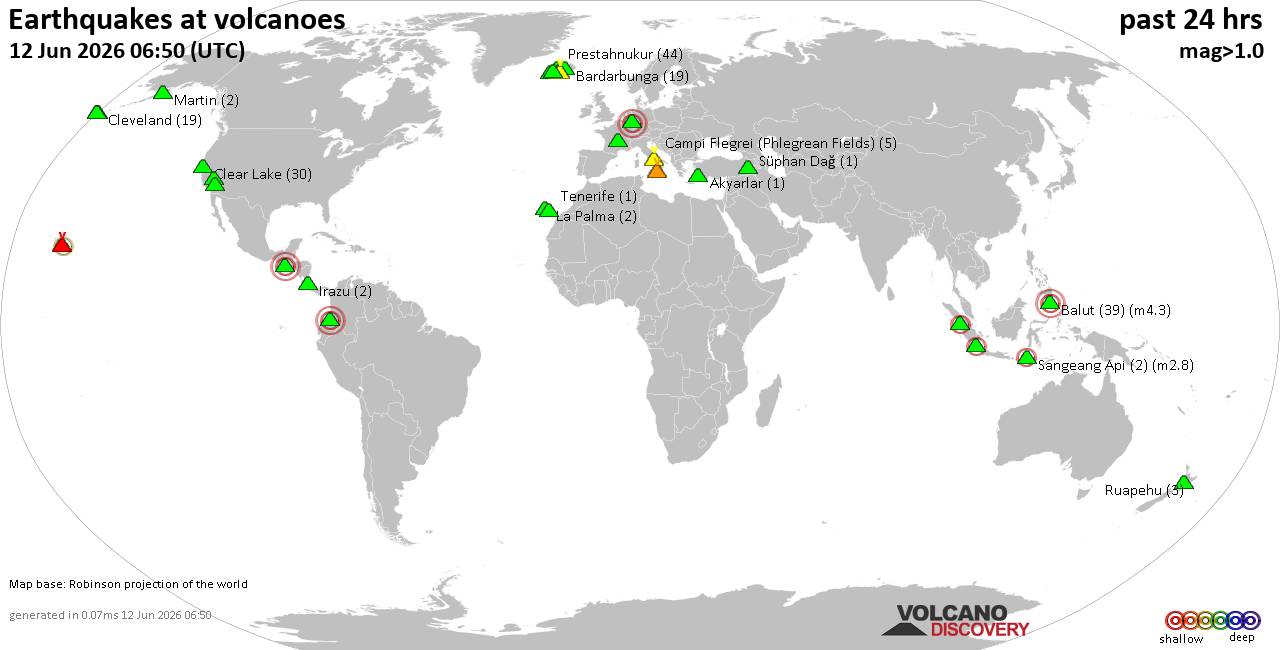
Volcano earthquake report for Friday, 12 Jun 2026
• Moderate mag. 4.0 earthquake - 26 km west of Gjirokaster, Qarku i Gjirokast...
• Moderate mag. 4.8 earthquake - Otago, New Zealand, on Friday, Jun 12, 2026,...
• Moderate mag. 4.5 earthquake - Madang Province, 24 km north of Goroka, Papu...
• Moderate mag. 4.2 earthquake - 20 km northwest of Blenheim, Marlborough, Ne...
• Moderate mag. 4.0 earthquake - Banda Sea, 43 km northwest of Tiakur, Indone...
|

#49755
Wed 01 Sep 2010 12:35:PM
|
Joined: Feb 2001
Posts: 678,976
Launch Director
|
OP

Launch Director
Joined: Feb 2001
Posts: 678,976 |
HUBBLE SPACE TELESCOPE - Continuing to Collect World Class Science
�
DAILY REPORT #5172
�
PERIOD COVERED: 5am August 31 - 5am September 1, 2010 (DOY 243/09:00z-244/09:00z)
�
FLIGHT OPERATIONS SUMMARY:
�
Significant Spacecraft Anomalies: (The following are preliminary reports
of potential non-nominal performance that will be investigated.)
�
HSTARS:
12372 - GSAcq(2,1,1) at 244/06:14:12z and REAcq(2,1,1) at 244/07:45:09z
������� �� both acquired fine lock backup on FGS 2.
�
������� �� Observations possibly affected WFC3 77-81, Proposal ID#11729.
�
�
FOR DOY 228:
12370 - REAcq(1,2,1) at 228/06:33:05z required two attempts to achieve
������� �� FL-DV on FGS1. The acquisition was successful.
�
������� �� Observations possibly affected: ACS 12 Proposal ID#11996 and
������� �� STIS 6 Proposal ID#11668.
�
�
COMPLETED OPS REQUEST: (None)
�
COMPLETED OPS NOTES: (None)
�
��������������� ������SCHEDULED����� SUCCESSFUL
FGS GSAcq��������� ����10������������� ����10���������������
FGS REAcq��������� �����08������������� ���08����������������
OBAD with Maneuver 08������������� ���08����������������
�
SIGNIFICANT EVENTS: (None)
�
OBSERVATIONS SCHEDULED:
�
ACS/WFC 11996
�
CCD Daily Monitor (Part 3)
�
This program comprises basic tests for measuring the read noise and dark
current of the ACS WFC and for tracking the growth of hot pixels. The
recorded frames are used to create bias and dark reference images for
science data reduction and calibration. This program will be executed
four days per week (Mon, Wed, Fri, Sun) for the duration of Cycle 17. To
facilitate scheduling, this program is split into three proposals. This
proposal covers 308 orbits (19.25 weeks) from 21 June 2010 to 1 November
2010.
�
WFC3/UVIS 11729
�
Photometric Metallicity Calibration with WFC3 Specialty Filters
�
The community has chosen to include several filters in the WFC3 filter
complement that have been designed to allow fairly precise estimates of
stellar metallicities, and many science programs are enabled by this
capability. Since these filters do not exactly match those used for this
purpose on the ground, however, the mapping of stellar colors to stellar
metallicities needs to be calibrated. We propose to achieve this
calibration through observations of five stellar clusters with well
known metallicities. We will calibrate several different filter
calibrations which will allow future users to determine what filter
combination best meets their science needs.
�
�
STIS/CC/MA 11668
�
Cosmo-chronometry and Elemental Abundance Distribution of the Ancient
Star HE1523-0901
�
We propose to obtain near-UV HST/STIS spectroscopy of the extremely
metal-poor, highly r-process-enhanced halo star HE 1523-0901, in order
to produce the most complete abundance distribution of the heaviest
stable elements, including platinum, osmium, and lead. These HST
abundance data will then be used to estimate the initial abundances of
the long-lived radioactive elements thorium and uranium, and by
comparison with their observed abundances, enable an accurate age
determination of this ancient star. The use of radioactive chronometers
in stars provides an independent lower limit on the age of the Galaxy,
which can be compared with alternative limits set by globular clusters
and by analysis from WMAP. Our proposed observations of HE1523-0901 will
also provide significant new information about the early chemical
history of the Galaxy, specifically, the nature of the first generations
of stars and the types of nucleosynthetic processes that occurred at the
onset of Galactic chemical evolution.
�
ACS/WFC3 11604
�
The Nuclear Structure of OH Megamaser Galaxies
�
We propose a snapshot survey of a complete sample of 80 OH megamaser
galaxies. Each galaxy will be imaged with the ACS/WFC through F814W and
a linear ramp filter (FR656N or FR716N or FR782N or FR853N) allowing us
to study both the spheroid and the gas morphology in Halpha + [N II]. We
will use the 9% ramps FR647M (5370-7570 angstroms) centered at 7000
angstroms and FR914M (7570-10, 719 angstroms) 8000 angstroms for
continuum subtraction for the high and low z objects respectively. OH
megamaser galaxies (OHMG) form an important class of ultraluminous
IR-galaxies (ULIRGs) whose maser lines emit QSO-like luminosities.
ULIRGs in general are associated with recent mergers but it is often
unclear whether their power output is dominated by starbursts or a
hidden QSO because of the high absorbing columns which hide their nuclei
even at X-ray wavelengths. In contrast, OHMG exhibit strong evidence for
the presence of an energetically important and recently triggered active
nucleus. In particular it is clear that much of the gas must have
already collapsed to form a nuclear disk which may be the progenitor of
a circum-nuclear torus, a key element of the unified scheme of AGN. A
great advantage of studying OHMG systems over the general ULIRG
population, is that the circum-nuclear disks are effectively "fixed" at
an inner, edge on, orientation, eliminating varying inclination as a
nuisance parameter. We will use the HST observations in conjunction with
existing maser and spectroscopic data to construct a detailed picture of
the circum-nuclear regions of a hitherto relatively neglected class of
galaxy that may hold the key to understanding the relationship between
galaxy mergers, nuclear star- formation, and the growth of massive black
holes and the triggering of nuclear activity.
�
COS/NUV 11540
�
COS-GTO: Search for Hydrocarbons and Nitriles in Pluto's Atmosphere
�
Methane is highly abundant in Pluto's atmosphere, and methane photolysis
is the starting point for a series of chemical processes that should
result in the production of hydrocarbons and nitriles. Photochemical
modeling of Pluto's atmosphere has suggested that detectable abundances
of various hydrocarbons and nitriles should occur on Pluto. However,
past analysis of 40 orbits of archival HST/FOS data in the mid-UV has
only produced upper limits on abundances of C4H2, C6H2, HC3N, and C4N2.
We will use COS to obtain spectra from 2060-2460A, including absorption
bands of the hydrocarbon diacetylene (C4H2) and the nitrile
cyanoacetylene (HC3N). Previously-measured 2-sigma upper limits for
these compounds are somewhat below the values computed in the
poorly-constrained models; the measurement uncertainties themselves are
of the same order as the modeled values. By reducing the uncertainties
by a factor of a few to several, we aim to detect the presence of these
compounds, or to provide more restrictive abundance limits. These
measurements will provide valuable new data on the nature and chemistry
of the Plutonian atmosphere.
�
STIS/CCD 11845
�
CCD Dark Monitor Part 2
�
Monitor the darks for the STIS CCD.
�
STIS/CCD 11847
�
CCD Bias Monitor-Part 2
�
Monitor the bias in the 1x1, 1x2, 2x1, and 2x2 bin settings at gain=1,
and 1x1 at gain = 4, to build up high-S/N superbiases and track the
evolution of hot columns.
�
STIS/MA2 11862
�
MAMA NUV Flats
�
This program will obtain NUV-MAMA observations of the STIS internal
Deuterium lamp to construct an NUV flat applicable to all NUV modes.
�
WFC3/ACS/IR 11563
�
Galaxies at z~7-10 in the Reionization Epoch: Luminosity Functions to
<0.2L* from Deep IR Imaging of the HUDF and HUDF05 Fields
�
The first generations of galaxies were assembled around redshifts
z~7-10+, just 500-800 Myr after recombination, in the heart of the
reionization of the universe. We know very little about galaxies in this
period. Despite great effort with HST and other telescopes, less than
~15 galaxies have been reliably detected so far at z>7, contrasting with
the ~1000 galaxies detected to date at z~6, just 200-400 Myr later, near
the end of the reionization epoch. WFC3 IR can dramatically change this
situation, enabling derivation of the galaxy luminosity function and its
shape at z~7-8 to well below L*, measurement of the UV luminosity
density at z~7-8 and z~8-9, and estimates of the contribution of
galaxies to reionization at these epochs, as well as characterization of
their properties (sizes, structure, colors). A quantitative leap in our
understanding of early galaxies, and the timescales of their buildup,
requires a total sample of ~100 galaxies at z~7-8 to ~29 AB mag. We can
achieve this with 192 WFC3 IR orbits on three disjoint fields
(minimizing cosmic variance): the HUDF and the two nearby deep fields of
the HUDF05. Our program uses three WFC3 IR filters, and leverages over
600 orbits of existing ACS data, to identify, with low contamination, a
large sample of over 100 objects at z~7-8, a very useful sample of ~23
at z~8-9, and limits at z~10. By careful placement of the WFC3 IR and
parallel ACS pointings, we also enhance the optical ACS imaging on the
HUDF and a HUDF05 field. We stress (1) the need to go deep, which is
paramount to define L*, the shape, and the slope alpha of the luminosity
function (LF) at these high redshifts; and (2) the far superior
performance of our strategy, compared with the use of strong lensing
clusters, in detecting significant samples of faint z~7-8 galaxies to
derive their luminosity function and UV ionizing flux. Our recent z~7.4
NICMOS results show that wide-area IR surveys, even of GOODS-like depth,
simply do not reach faint enough at z~7-9 to meet the LF and UV flux
objectives. In the spirit of the HDF and the HUDF, we will waive any
proprietary period, and will also deliver the reduced data to STScI. The
proposed data will provide a Legacy resource of great value for a wide
range of archival science investigations of galaxies at redshifts z~2-
9. The data are likely to remain the deepest IR/optical images until
JWST is launched, and will provide sources for spectroscopic follow up
by JWST, ALMA and EVLA.
�
WFC3/ACS/IR 11647
�
A Deep Exploration of Classes of Long Period Variable Stars in M31
�
We propose a thrifty but information-packed investigation with WFC3/IR
F160W and F110W providing crucial information about Long Period
Variables in M31, at a level of detail that has recently allowed the
discovery of new variable star classes in the Magellanic Clouds, a very
different stellar population. These observations are buttressed by an
extensive map of the same fields with ACS and WFC3 exposures in F555W
and F814W, and a massive ground- based imaging patrol producing
well-sampled light curves for more than 400,000 variable stars. Our
primary goal is to collect sufficient NIR data in order to analyze and
classify the huge number of long-period variables in our catalog (see
below) through Period Luminosity (P/L) diagrams. We will produce
accurate P/L diagrams for both the bulge and a progression of locations
throughout the disk of M31. These diagrams will be similar in quality to
those currently in the Magellanic Clouds, with their lower metallicity,
radically different star formation history, and larger spread in
distance to the variables. M31 offers an excellent chance to study more
typical disk populations, in a manner which might be extended to more
distant galaxies where such variables are still visible, probing a much
more evenly spread progenitor age distribution than cepheids (and
perhaps useful as a distance scale alternative or cross- check). Our
data will also provide a massive and unique color-magnitude dataset; we
expect that this study will produce several important results, among
them a better understanding of P/L and P/L-color relations for pulsating
variables which are essential to the extragalactic distance ladder. We
will view these variables at a common distance over a range of
metallicities (eliminating the distance-error vs. metallicity ambiguity
between the LMC and SMC), allow further insight into possible
faint-variable mass-loss for higher metallicities, and in general
produce a sample more typical of giant disk galaxies predominant in many
studies.
�
WFC3/ACS/IR 11840
�
Identifying the Host Galaxies for Optically Dark Gamma-Ray Bursts
�
We propose to use the high spatial resolution of Chandra to obtain
precise positions for a sample of Gamma-Ray Bursts (GRBs) with no
optical afterglows, where the optical light is suppressed relative to
the X-ray flux. These bursts are likely to be highly obscured and may
have different environments from the optically bright GRBs. Our Chandra
observations will (unlike Swift XRT positions) allow for the unique
identification of a host galaxy. To locate these host galaxies we will
follow up our Chandra positions with deep optical and IR observations
with HST. The ultimate aim is to understand any differences between the
host galaxies of optically dark and bright GRBs, and how these affect
the use of GRBs as tracers of starformation and galaxy evolution at high
redshift.
�
WFC3/ACS/UVIS 11684
�
The First Proper Motion Measurement for M31: Dynamics and Mass of the
Local Group
�
We will perform observations to determine the proper motion of the
Andromeda galaxy M31, which has been sought for almost a century without
success. While challenging, this measurement has now become possible due
to the availability of existing deep ACS/WFC images of several M31
fields. The requested second epoch images will yield the average shift
of the M31 stars with respect to compact galaxies in the background. Our
observing strategy uses six different fields (three primary and three
coordinated parallel) with two different instruments (ACS and WFC3) to
provide a maximum handle on possible systematic effects. The expected
result will be sufficiently accurate to: (a) discriminate between
different histories for the dynamics of the Local Group; (b) constrain
the mass distribution of the Local Group; (c) determine the details of
the expected future merger between M31 and the Milky Way; (d) infer the
past interaction history between M31 and M33; (e) constrain the internal
proper motion kinematics of the M31 spheroid, outer disk, and tidal
stream; and (f) obtain a pilot estimate of the M31 distance through the
method of rotational parallax.
�
WFC3/IR/ACS/WFC 11663
�
Formation and Evolution of Massive Galaxies in the Richest Environments
at 1.5 < z < 2.0
�
We propose to image seven 1.5<z<2 clusters and groups from the IRAC
Shallow Cluster Survey with WFC3 and ACS in order to study the formation
and evolution of massive galaxies in the richest environments in the
Universe in this important redshift range. We will measure the evolution
of the sizes and morphologies of massive cluster galaxies, as a function
of redshift, richness, radius and local density. In combination with
allocated Keck spectroscopy, we will directly measure the dry merger
fraction in these clusters, as well as the evolution of Brightest
Cluster Galaxies (BCGs) over this redshift range where clear model
predictions can be confronted. Finally we will measure both the epoch of
formation of the stellar populations and the assembly history of that
stellar mass, the two key parameters in the modern galaxy formation
paradigm.
�
WFC3/IR/S/C 11929
�
IR Dark Current Monitor
�
Analyses of ground test data showed that dark current signals are more
reliably removed from science data using darks taken with the same
exposure sequences as the science data, than with a single dark current
image scaled by desired exposure time. Therefore, dark current images
must be collected using all sample sequences that will be used in
science observations. These observations will be used to monitor changes
in the dark current of the WFC3-IR channel on a day-to-day basis, and to
build calibration dark current ramps for each of the sample sequences to
be used by Gos in Cycle 17. For each sample sequence/array size
combination, a median ramp will be created and delivered to the
calibration database system (CDBS).
�
WFC3/IR/S/C 12089
�
Persistence - Part 2
�
The IR detectors on WFC3, like other IR detectors, trap charge when
exposed to sources near or above the full well of the detector diodes.
This charge leaks out, producing detectable afterglow images for periods
which can last for several hours, depending on the amount of over
exposure. These visits, which consist of tungsten lamp exposures of
varying durations followed by darks, are intended to provide a better
calibration of persistence over the full area of the IR detector of
WFC3.
�
WFC3/UV 12237
�
Orbits, Masses, Densities, and Colors of Two Transneptunian Binaries
�
Binaries are the key to learning many crucial bulk properties of
transneptunian objects (TNOs) including their masses. Perhaps the most
interesting mass-dependent property of a TNO is its bulk density, which
provides unique information about its bulk composition and interior
structure. Densities have so far only been measured for a handful of
binary TNO systems. This proposal seeks to determine orbits and thus
masses of two more binary TNOs, both of which are also to be observed at
thermal infrared wavelengths by the Herschel spacecraft. Combining the
masses from Hubble with the sizes from Herschel will enable us to
compute their densities. We will also obtain multi-wavelength
photometric colors of the individual components of each binary system.
It is imperative to link colors to the physical properties measurable in
binary systems in order to use the remnant planetesimals in today's
Kuiper belt to learn more about the early history of our own solar
system, and more generally about how planetesimals form in nebular disks
and subsequently evolve.
�
WFC3/UVIS 11565
�
A Search for Astrometric Companions to Very Low-Mass, Population II
Stars
�
We propose to carry out a Snapshot search for astrometric companions in
a subsample of very low-mass, halo subdwarfs identified within 120
parsecs of the Sun. These ultra-cool M subdwarfs are local
representatives of the lowest-mass H burning objects from the Galactic
Population II. The expected 3-4 astrometric doubles that will be
discovered will be invaluable in that they will be the first systems
from which gravitational masses of metal-poor stars at the bottom of the
main sequence can be directly measured.
�
WFC3/UVIS 11905
�
WFC3 UVIS CCD Daily Monitor
�
The behavior of the WFC3 UVIS CCD will be monitored daily with a set of
full-frame, four-amp bias and dark frames. A smaller set of 2Kx4K
subarray biases are acquired at less frequent intervals throughout the
cycle to support subarray science observations. The internals from this
proposal, along with those from the anneal procedure (Proposal 11909),
will be used to generate the necessary superbias and superdark reference
files for the calibration pipeline (CDBS).
�
WFC3/UVIS 11912
�
UVIS Internal Flats
�
This proposal will be used to assess the stability of the flat field
structure for the UVIS detector throughout the 15 months of Cycle 17.
The data will be used to generate on-orbit updates for the delta-flat
field reference files used in the WFC3 calibration pipeline, if
significant changes in the flat structure are seen.
David Cottle
UBB Owner & Administrator
|
|



CMS The Best Conveyancing solicitors conveyancing quotes throughout the UK
For any webhosting enquiries please email webmaster@aus-city.com
|
|
Forums60
Topics781,222
Posts815,980
Members2,960
| |
Most Online22,463
May 9th, 2026
|
|
|